
Breaking the Replaster Cycle: A Smarter Approach to Pool Renovation

In today’s pool renovation market, builders are facing a growing challenge: how to deliver long-term performance in an industry historically built around short-term surface solutions.
In today’s pool renovation market, builders are facing a growing challenge: how to deliver long-term performance in an industry historically built around short-term surface solutions.
For decades, plaster has been the default interior finish. But for many homeowners—and increasingly, for forward-thinking builders—that model is being questioned. Cracking, staining, delamination, and recurring maintenance cycles are no longer seen as inevitable. They’re seen as avoidable.
A recent luxury pool renovation in the Ozarks of Missouri offers a clear example of how that shift is taking shape—and why reinforced PVC membrane systems are becoming a preferred alternative.
When a Surface Problem Isn’t Just Surface-Level
The project began with a familiar scenario: a high-end residential pool showing signs of age. Surface cracks. Cosmetic wear. Subtle leaks that were becoming more pronounced over time.
But as experienced builders have seen time and again, these issues are rarely isolated.
When traditional plaster systems fail, the root problem isn’t just the surface—it’s often structural. Cracking, delamination, and chemical imbalance create a cycle that leads to ongoing repairs and repeated resurfacing.
For homeowners, the typical solution has long been straightforward: drain the pool, resurface, and repeat the process every decade or so. But that cycle comes with increasing costs—and growing frustration. “A basic replaster may look good short-term, but underlying issues often resurface within a few years,” says Aaron King, CEO and Founder of All3Pools in Missouri who took on the luxury pool renovation in the Ozarks.
In regions like the Ozarks, the problem is amplified. Seasonal extremes—freezing winters followed by intense summer heat—place continuous stress on cement-based finishes. Over time, that expansion and contraction accelerates deterioration, making long-term performance difficult to achieve with traditional materials.
For this homeowner, the decision was clear: another replaster wasn’t a solution. It was simply restarting the same cycle.
A Shift in Builder Mindset
What makes this project particularly relevant is not just the material choice—it’s the builder perspective behind it.
Across the industry, more contractors are beginning to question whether traditional interior finishes truly align with modern expectations for durability and performance. Rather than treating the pool interior as a decorative layer, leading builders are approaching it as an integrated system—one that must provide both waterproofing and long-term stability.
This shift is especially evident in regions where environmental conditions push materials to their limits. In those cases, performance is no longer a secondary consideration—it becomes the defining factor.
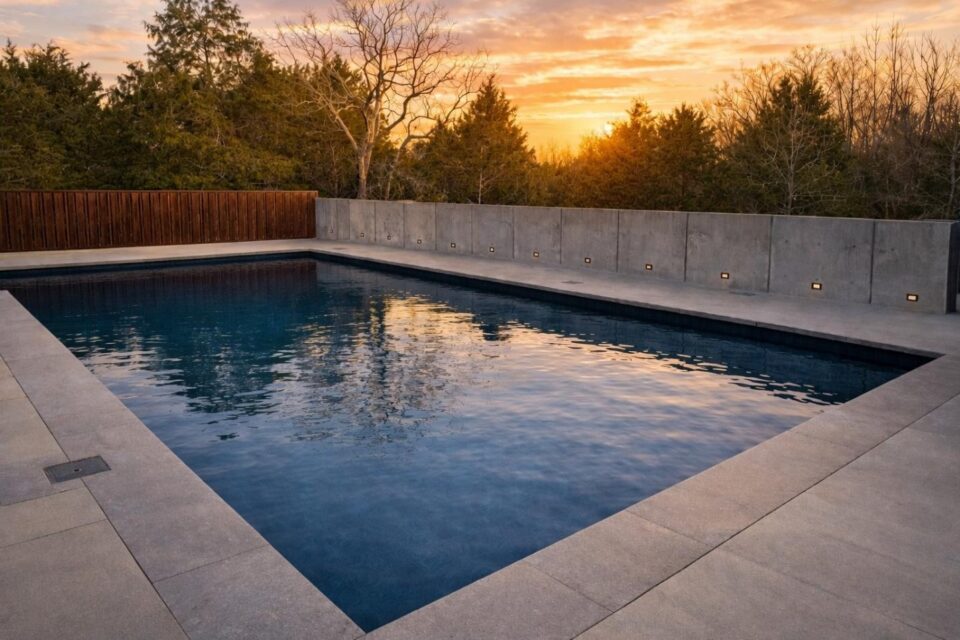
“Early on, like most builders, we treated the interior as a finish layer. Over time, that thinking changed,” explains King. “The interior needs to be a system that must perform over time— not just look good on day one.” King explains that he came across the RENOLIT PVC membrane about two years ago. “It was a turning point for us. No joke,” says King. “Once the membrane is custom fit and heat-welded in, the pool is fully watertight. That changes everything.”
From Finish to System
Unlike plaster or coatings, reinforced PVC membrane systems are not applied finishes. They are fully engineered waterproofing solutions—typically 60–80 mil thick, reinforced with a polyester mesh, and installed through a heat-welded process.
In the Ozarks renovation project, the pool was retrofitted using a RENOLIT reinforced membrane, creating a continuous, sealed interior surface across the entire vessel.
As described in the project overview:
“It’s not a patch—it’s a full retrofit that resets the life cycle of the pool.”
This distinction is critical. Instead of relying on the underlying shell to remain perfectly intact, the membrane itself becomes the primary waterproofing layer.
That means:
- No cracking or delamination from surface stress
- No dependence on curing conditions
- No recurring replaster cycle
The result is a system designed to deliver consistent performance over time, rather than a finish that gradually degrades.
“From a business standpoint, it reduces callbacks. We’re not going back to chase leaks or deal with plaster failures,” says King. “For the homeowner, it’s a more reliable pool. Lower maintenance. No resurfacing cycle every few years. Just consistent performance.”
Installation: Precision Over Guesswork
The renovation process reflects this system-based approach.
Rather than patching visible issues, the project began by addressing key structural components—replacing penetrations, updating fittings, and preparing the existing shell for full encapsulation.
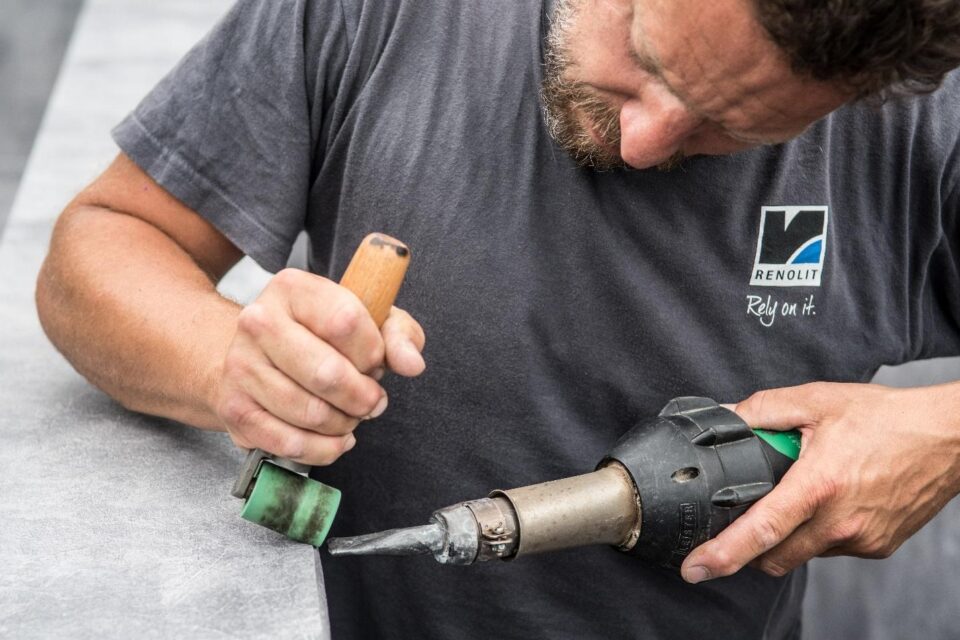
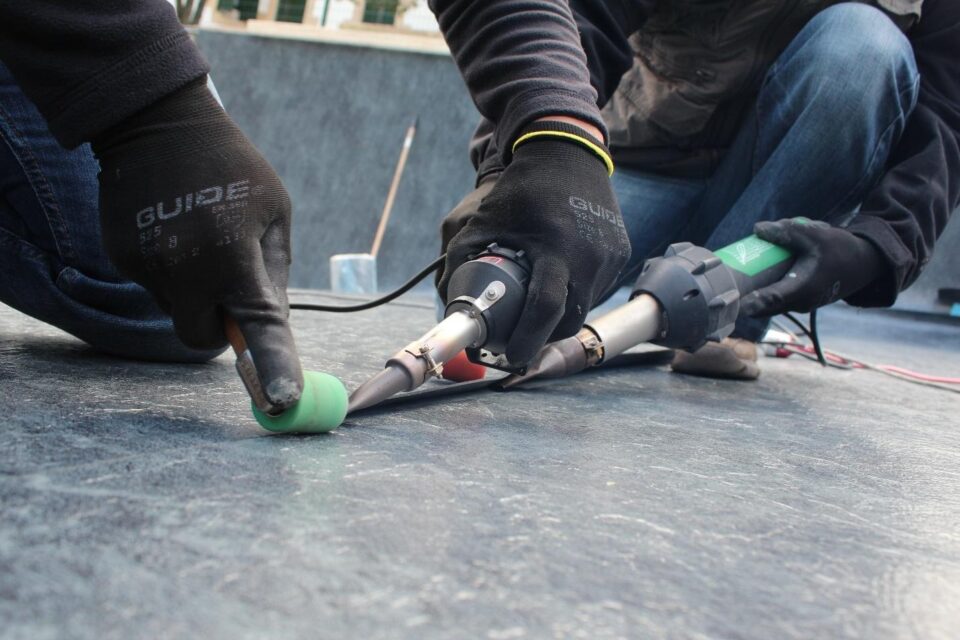
From there, the reinforced membrane was custom-fit and heat-welded in place, forming a single, continuous barrier. Because the system does not rely on chemical curing, installation is less sensitive to environmental variables such as temperature and humidity—factors that often complicate traditional resurfacing projects.
“RENOLIT’s membrane is 100% waterproof and independent of the shell. It allows us to bridge over aging or compromised surfaces and significantly reduce risk tied to older, deteriorating pool walls,” explains King.

Built for Real-World Conditions
One of the most significant advantages of reinforced PVC systems is how they respond to environmental stress.
Where rigid, cement-based finishes are prone to cracking under expansion and contraction, the membrane remains flexible. It absorbs movement rather than resisting it, maintaining its integrity through seasonal changes.
In regions like the Ozarks, where pools are exposed to wide temperature swings, this flexibility becomes a critical performance factor. “In freeze-thaw climates like those in Missouri, that matters. The membrane handles temperature swings and movement far better than traditional plaster,” explains King. “That’s been our real-world experience.”
Instead of developing cracks, hollow spots, or surface failures, the system remains stable—reducing the likelihood of repairs and extending the functional life of the pool. “For builders, this translates into greater control over quality and a more predictable installation process,” explains King. “Because the system isn’t dependent on the same environmental conditions, we can plan and execute on our schedule. We’re not waiting on ideal weather windows or chasing subcontractors. That alone removes a significant amount of downtime and uncertainty.”
Aesthetic Expectations, Redefined
Performance alone isn’t enough in today’s high-end residential market. Homeowners expect finishes that are not only durable, but visually refined.
Historically, plaster has been associated with a premium aesthetic, but it often comes with inconsistencies in color, texture, and long-term appearance. Variations in curing conditions and material composition can lead to uneven finishes that evolve over time.
Advancements in reinforced membrane technology are changing that perception.
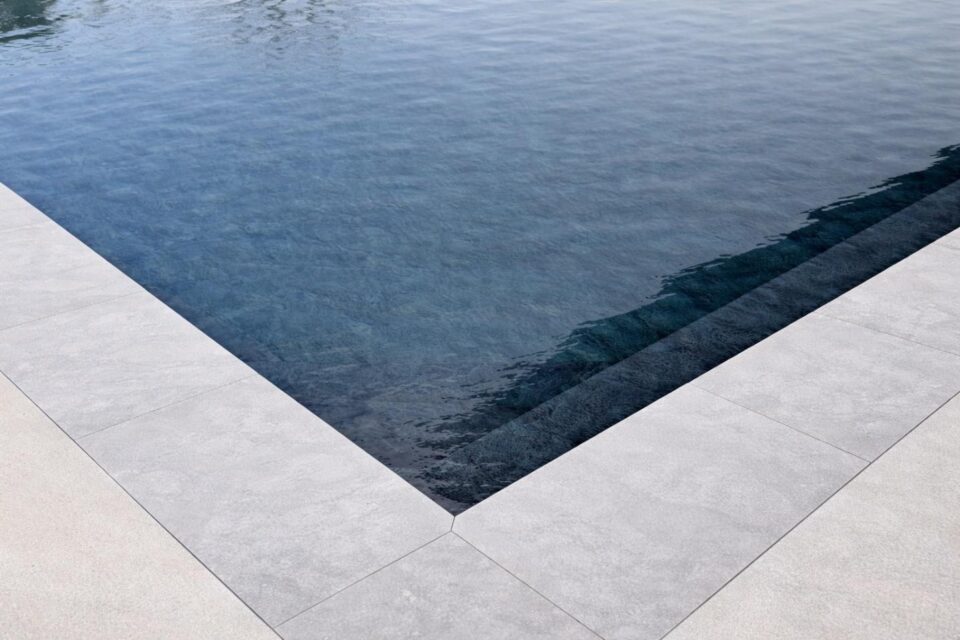
The textured RENOLIT finish used in this project delivers a consistent, high-end appearance with controlled color and surface uniformity. It eliminates many of the visual variables associated with traditional finishes, while maintaining the clean, elegant look expected in luxury residential design.
The result is a pool that meets both aesthetic and performance expectations—without compromise.
Beyond One Project: A Growing Trend
While this Ozarks renovation represents a single project, it reflects a broader shift within the industry.
Builders are increasingly seeking solutions that:
- Reduce long-term maintenance
- Improve reliability across varying climates
- Differentiate their offerings in a competitive market
At the same time, demand for training and certification around reinforced membrane systems continues to grow. Projects like this one often serve as real-world demonstrations, helping contractors understand both the installation process and the long-term benefits.
In this case, the renovation also served as a training opportunity for local builders, contributing to the development of a skilled installer network and supporting broader market adoption.
A New Standard for Renovation?
The question isn’t whether plaster will disappear—it won’t. But the assumption that it is the only viable option is clearly being challenged.
Projects like this one demonstrate that pool renovation can be approached differently:
- Not as a recurring maintenance cycle
- But as a long-term upgrade
For builders, that shift opens new opportunities—not just to repair aging pools, but to deliver solutions that align with modern expectations for durability, performance, and design.
“RENOLIT is a fully heat welded, watertight system that’s independent of the concrete shell. That matters,” explains King. “The shell can move or develop minor cracking over time, and the membrane still maintains a waterproof barrier. You’re no longer relying on the plaster surface to hold water. From a lifecycle standpoint, that’s a reset. So instead of continuing a cycle of patching and replastering, you’re installing a new, durable waterproof system — and effectively starting fresh.”
Conclusion
As the pool industry continues to evolve, the distinction between “finish” and “system” is becoming increasingly important.
This Ozarks renovation highlights what happens when builders prioritize long-term performance over short-term fixes. By rethinking the role of the interior finish, they are not only improving durability—they are redefining what homeowners can expect from their pools.
The future of pool interiors isn’t just about how they look on day one.
It’s about how they perform for years to come.

Tony Jordan
Tony Jordan has over 35 years of experience in the manufacturing, sales and application of PVC reinforced pool membranes for commercial and residential use. He is the business development manager at RENOLIT and can be reached at Tony.Jordan@Renolit.com or by calling 519-500-4021. More information about the company can be found at renolit-alkorplan.com/