Clean Away the Green
How pool pros price, treat and manage algae-heavy cleanups
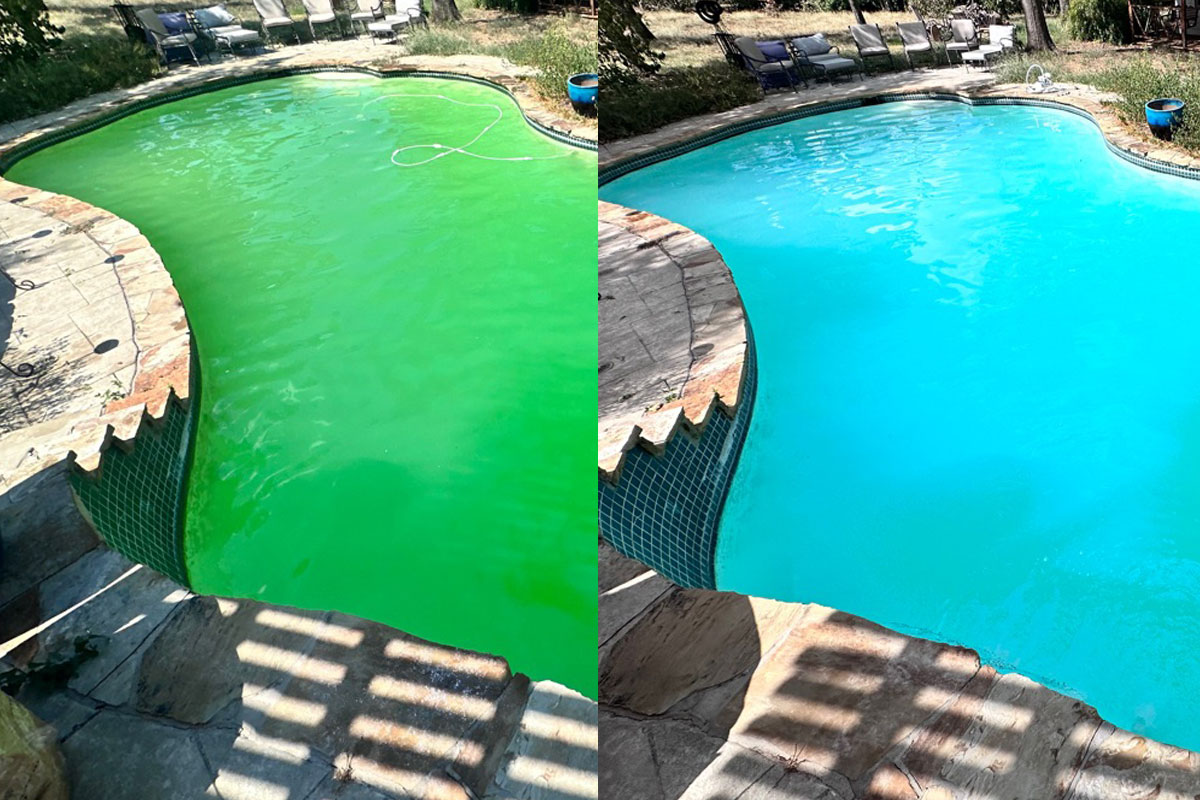
When pool water chemistry and circulation break down, it’s not as simple as adding a few gallons of chlorine. Taking a pool from green to clean can require multiple visits and the right combination of chemicals, filtration and time.
Bennett Oehlschlager, store manager at Simplified Pools in Northlake, Texas, says they classify a pool as a green-to-clean when there’s algae and the pool isn’t circulating or maintaining proper water chemistry. That definition can range from light algae on walls to a fully opaque pool, impacting how the job is priced and approached.
Pricing and packages vary
Because no two green pools are alike, most companies avoid flat-rate pricing.
Simplified Pools offers tiered green-to-clean packages based on factors like pool size, severity of algae and expected labor and materials.
“We like to quote it from what’s actually going on at the pool,” Oehlschlager says.
At Horizon Pool & Patio in Wellington, Florida, they typically charge per visit plus chemicals, says John Kenbeek, sales and retail manager.
That variability comes down to how quickly conditions can change and how different environments accelerate the problem.
While it may take a week or two for a pool to go from slightly green to a complete swamp in Texas, pools in Florida can turn much faster.
“It can happen in as little as a few days,” Kenbeek says.
Pricing Models: What Works
Tiered packages
• Priced based on severity (light, moderate, severe) and pool size
• Typically includes a set number of visits and baseline materials
• Easier for customers to understand up-front costs
• Works well for companies with consistent service processes
Per visit + chemicals
• Charges labor per visit plus cost of chemicals used
• Adapts to unknown variables like weather, debris load and filtration issues
• Reduces risk of underpricing complex jobs
• Often paired with estimated visit ranges (e.g., four to six visits)
Why pools go green so fast
Heat, rain and lack of circulation all play a role, but climate can dramatically speed up the process.
Summers in south Florida often bring heavy rainfall — averaging around 2 inches per week — combined with water temperatures in the low 90s.
“It makes for an easy breeding ground for algae and bacteria,” Kenbeek says. “And of the chemicals that your pool needs, rainwater has exactly zero.”
Without circulation, the problem compounds quickly.
In stagnant water, algae can spread through the entire system, including plumbing, making cleanup more complex and time-consuming.
What’s included
Most green-to-clean services include a combination of:
- Shock or chlorine treatment
- Filter cleaning
- Vacuuming and brushing
- Clarifiers or flocculants (as needed)
- Follow-up visits
The number of visits varies widely. Simplified Pools typically builds a minimum of three into its packages, while Horizon often sees four to six visits for heavily impacted pools.
Setting expectations and avoiding surprises
One of the biggest challenges is managing customer expectations — especially when homeowners expect a next-day fix.
Estimates are often based on customer-provided photos, pool size and visible conditions, but even then, timelines can shift.
Because conditions, especially weather, can change quickly, Kenbeek says they avoid promising exact completion dates.
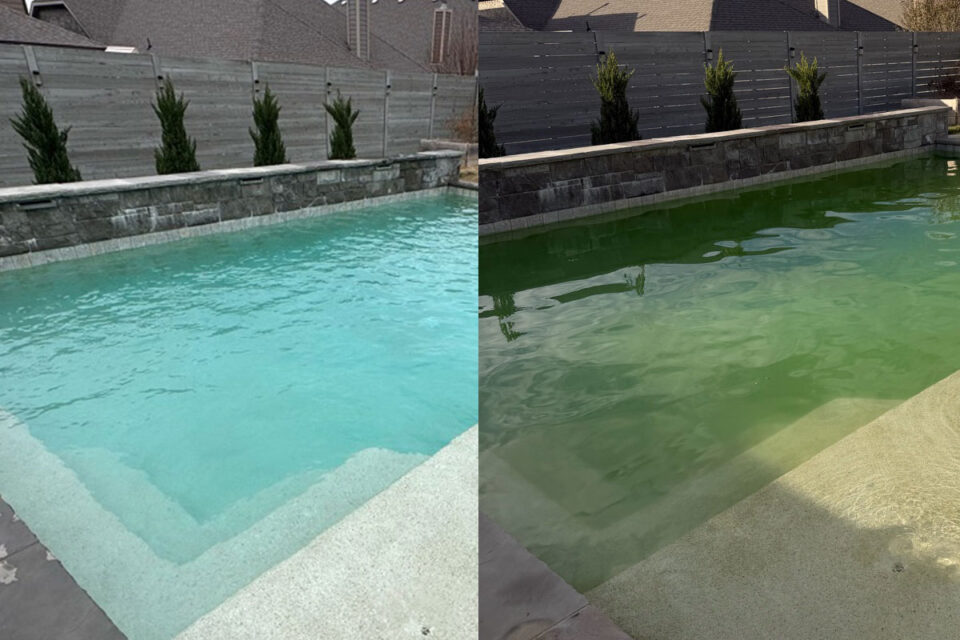
Treatment starts with chemistry
Regardless of location, pros tend to prioritize similar chemistry adjustments first.
At Simplified Pools, that means addressing pH, then free chlorine, followed by stabilizer and phosphates.
For Horizon, the focus is similar: keeping chlorine levels high and pH low before adjusting anything else.
But chemistry alone won’t solve the problem.
“The chlorine kills all the algae,” Oehlschlager says. “The filtration is basically what keeps the pool from going back to green again.”
Filtration does the heavy lifting
Filtration plays a critical role in clearing a pool once algae is killed.
As debris and dead algae accumulate, filters often need to be cleaned throughout the process — especially as pressure builds.
“If you can’t filter the stuff out of it, then you’re never going to clear it up,” Kenbeek says.
In some cases, filtration issues are the root cause of the problem. Aging or clogged filters can prevent proper circulation, making it impossible to fully clean the water until its repaired or replaced.
Every pool requires a custom approach
There’s no one-size-fits-all treatment plan for green pools.
“It just depends on how bad it is,” Kenbeek says. “If you have algae that’s clinging to the walls, like long strands of green algae, then you’re never going to really clear that up. The walls and everything else will be stained. At that point, we are going to drain it, acid wash, chlorine wash and pressure wash it just to get it as clear as we can.”
In less severe cases, pools can often be restored using shock treatments, clarifiers, filtration and time, without the need for a full drain.
Common mistakes that make it worse
In many cases, the hardest green-to-clean jobs could have been easier with earlier intervention.
Oehlschlager says homeowners often skip initial treatment or fail to keep water circulating.
“In some cases, they might have a large amount of debris in there that they’re not able to get out if they don’t run their pool cleaner,” he says. “That contributes to a harder cleanup.”
Waiting too long is another major issue.
“They just don’t expect [the pool condition to change] as fast as it can, especially in south Florida,” Kenbeek says. “They’ll go, ‘It’s just a little green on Monday, but I’m going to go to the pool store on Saturday.’ By the time Saturday rolls around, you can’t see the bottom of the steps.”
Turning cleanup into long-term business
Once a pool is restored, many customers want to avoid going through the process again — creating natural upsell opportunities.
Weekly service is the most common next step, along with equipment repairs, filter replacements or system upgrades.
“Once they see the beautiful and sparkling pool, we can say, ‘Are you interested in us taking it over so you don’t have to go through this again?’ ” Kenbeek says. “It’s a natural transition from ‘You had a green pool but now it’s nice and clean’ to ‘We helped you do that — we can keep it that way.’ ”