The Way of the Trowel
Training your plaster crew for excellence
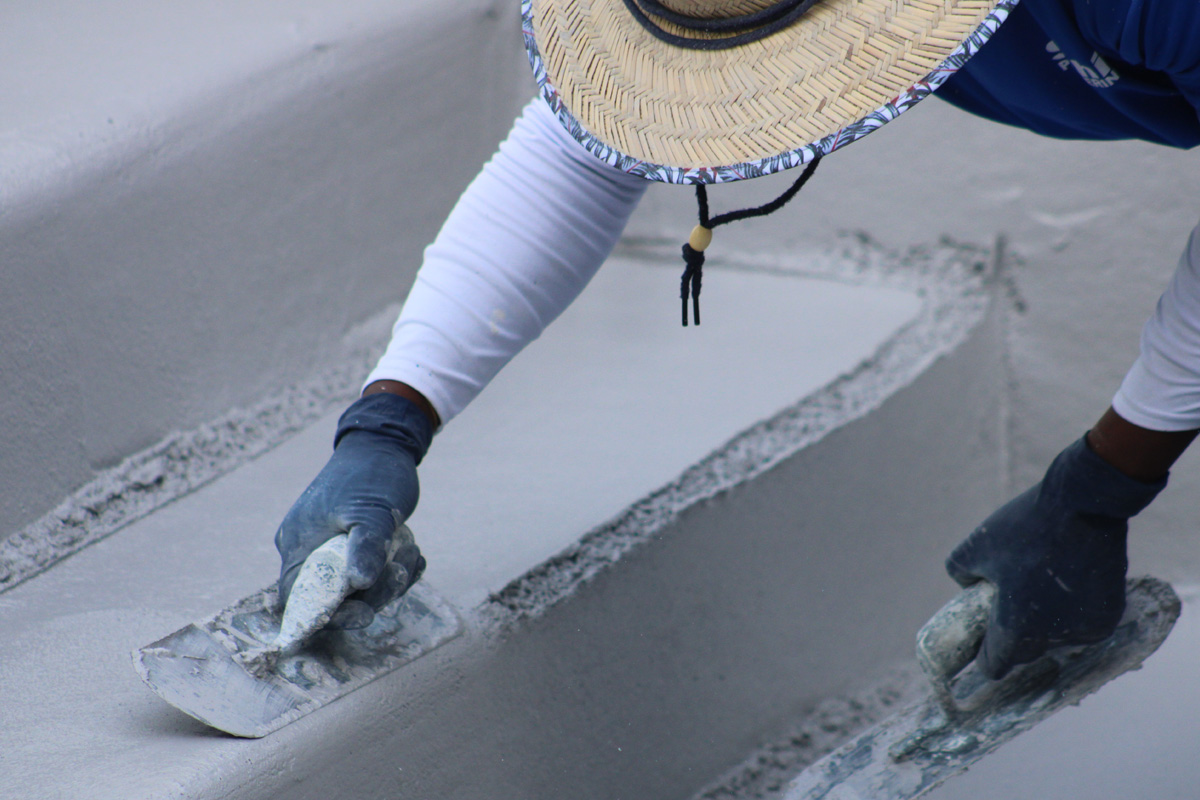
Learning often starts in the classroom, but when it comes to mastering plastering techniques, many industry veterans say on-site experience is the best education.
“You can’t take [someone who works in the field] and put them in a classroom for eight hours,” says Jon Temple, founder of Tempool in Jacksonville, Florida. “There needs to be a hands-on training movement in our industry.”
With decades of plastering experience, Temple says one of the biggest gaps in the industry is the lack of practical, on-the-job learning. He hopes the traditional approach to conference workshops will shift to “less talk, more show.”
We’re construction workers. We have to be taught with something that fits us. It needs to be vocational training.”
Jon Temple, Tempool
Temple believes classroom learning has its place but putting that knowledge into practice is the best and most efficient way to train new plasterers. Through Tempool’s consulting and training program and courses with Watershape University, he takes a comprehensive approach to skill development.
“We’re construction workers,” Temple says. “We have to be taught with something that fits us. It needs to be vocational training.”
Closing the knowledge gap
Josh Parrott, national training director for MicroGlass in Molino, Florida, sees the lack of standardized best practices as another blind spot in plaster training.
With 30 years of plastering experience, Parrott now shares practical guidance with crews nationwide through MicroGlass education sessions.
“It’s not that they’re choosing to [do it wrong], they just don’t know what’s best practice,” Parrott says. “And with us traveling around, we’ve really been able to help on that level.”
Alan Smith, founder of Alan Smith Pools and co-founder and chairman of MicroGlass, agrees that the industry needs more widespread awareness of proper techniques. “There’s so much to know and understand about each specific thing that has an effect later on in the job’s success or quality,” Smith says.
Organizations like the National Plasterers Council provide the latest training and resources, including translated materials to help bridge language barriers, but Smith says many plaster companies today are much smaller operations — and that can limit their access to industry education.
“Much of our industry has gone from multicrew to a single truck company,” Smith says. “They’re not really big into involvement at the association level, so they’re missing out on the training.”
Parrott praises these smaller, hard-working businesses but notes that “generational learning” in some crews may contribute to approaches that get the work done but fall short of industry standards.
Learning by doing
Plaster pros looking to strengthen their training techniques can start by familiarizing themselves with best practices and implementing hands-on experience.
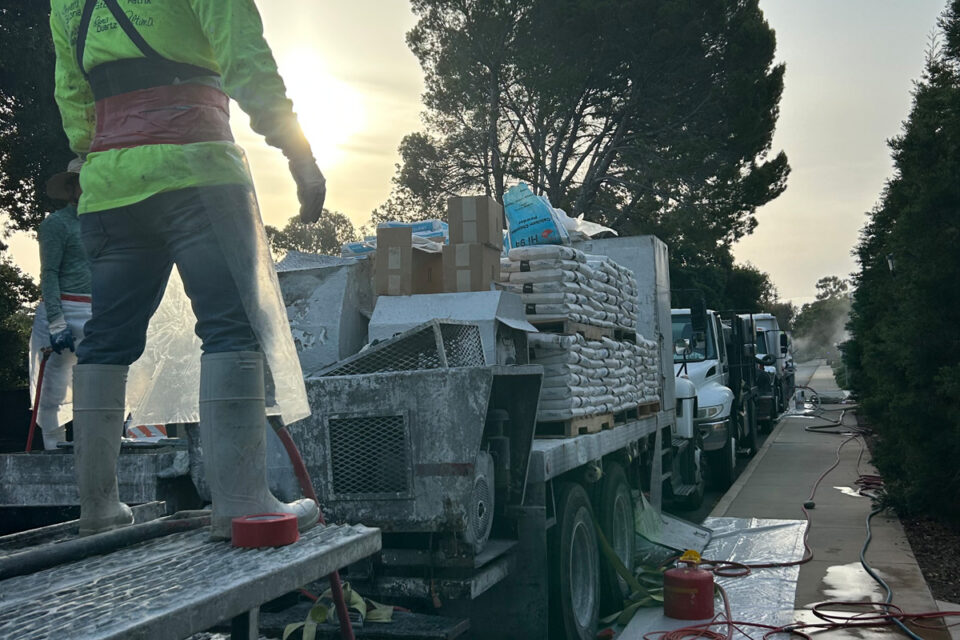
Temple, Parrott and Smith all start trainees on the mixer, where they learn about materials, ratios and sequencing before rotating through troweling and support roles. The process helps identify a trainee’s strengths, weaknesses and teamwork skills.
“We don’t want you on the crew — even if you’re a really good, talented finisher — if you can’t work as a team and get along with everybody,” Smith says.
Temple suggests paying close attention to how a trainee handles the intensity of the labor. “When we’re teaching somebody new, we want to see if they’re going to be able to work in the sun and do the physical work,” he says.
Shaun Goldberg, manager for Burkett’s Pool Plastering & Remodeling and current chairman for the NPC, says every new hire at Burkett’s begins with safety training before learning the trade.
New employees get instruction on equipment operation, emergency procedures and personal protective equipment before shadowing a crew. Training for the mixer includes proper water content, material ratios and mixing time — skills that can take weeks to learn.
Having a good teacher is a must, but you still need to put in the time to be comfortable with the feel and the timing of plastering swimming pools.”
Shaun Goldberg, Burkett’s Pool Plastering & Remodeling
Trowel training, Goldberg says, takes patience and practice. “It’s like learning to play golf. It takes a lot of golf swings to retain that muscle memory,” Goldberg says. “Having a good teacher is a must, but you still need to put in the time to be comfortable with the feel and the timing of plastering swimming pools.”
Building a culture of excellence
Parrott emphasizes that strong training goes hand in hand with strong leadership. He encourages plaster pros to lead by example, keep up morale, be present on the jobsite and hustle alongside their crew.
“A lot of it comes from the top down,” Parrott says, recalling his days leading crews. “It was consistency, showing up every day, noticing if somebody wasn’t at their best in the morning, pulling them aside and going, ‘Hey, man, everything good?’ ”
Goldberg also believes in this approach, with the bar held high for management, the foreman and the crews. “Craftsmanship starts with the desire to be the best and do your best every day,” he says. “We have a quality-control person who works with different crews. We identify areas that we can focus on in our training meetings and work to keep that at the forefront every day.”

Quality comes full circle
Most plasterers don’t get to see the finished pool full of water, but showing photos or bringing the crew back to see it a week later can make an impact and reinforce lessons. Any imperfections can be noted and will help trainees realize the “why” behind the methods they’re learning.
“When the pool is full of water, they’ll understand the concept,” Parrott says. “You may think everything was good the day you plastered it, but this is what we see one or two weeks later.”
Temple recommends pairing new plasterers with experienced mentors to catch mistakes early and create teachable moments. He also uses a whiteboard on-site to draw concepts for visual learners.
“I never throw anybody into the water and tell them to start swimming,” Temple says. “I’ve always got a lifeguard right there. After a while, there are fewer mistakes. And when there is a mistake, they’re able to catch it and fix it and then talk about what happened.”