
Improve with Caution
What builders should know before combining legacy pools with modern equipment and upgrades
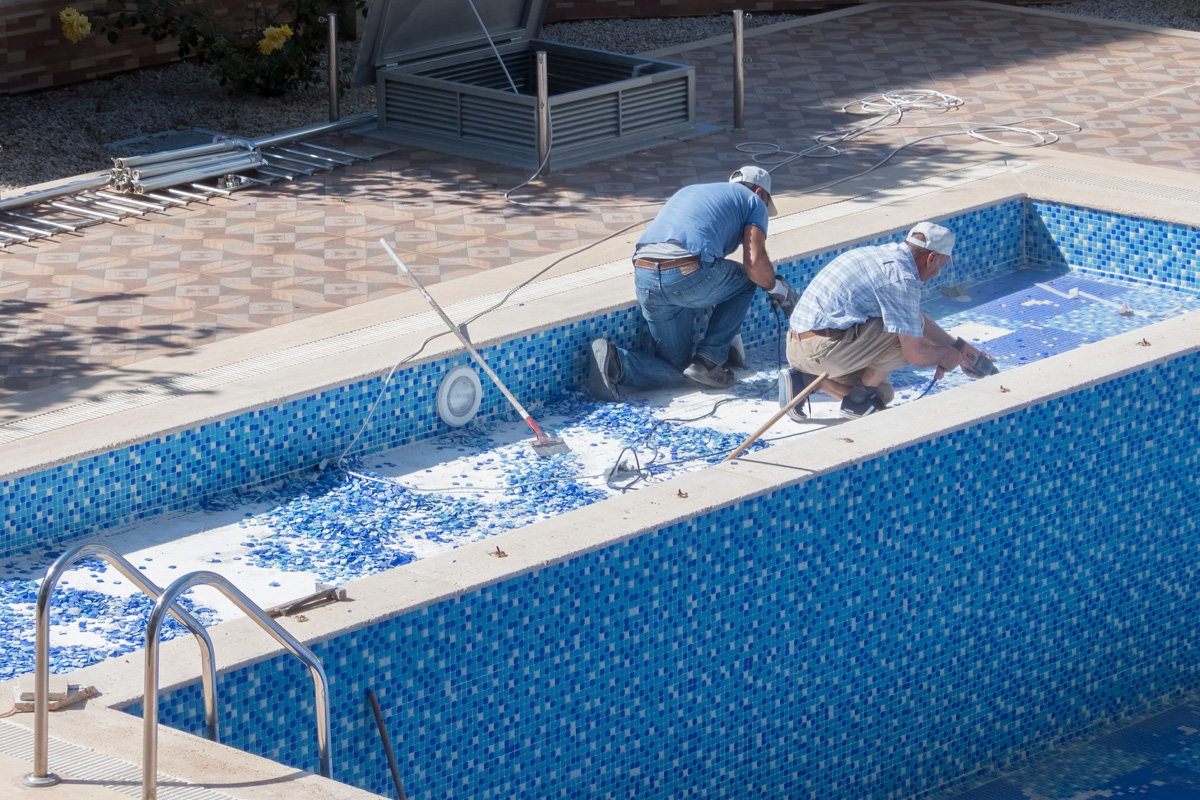
Retrofitting older pools with modern equipment, finishes or structural upgrades can create problems that don’t surface until months or years later. Builders say avoiding those failures starts with asking better questions, thoroughly evaluating existing conditions and knowing when a partial upgrade simply isn’t worth the risk.
Know how the pool is used
Before recommending upgrades, builders say they first need to understand how the pool is being used. A lightly used backyard pool presents different demands than one handling frequent parties, heavy swimmer loads, pets or challenging environmental conditions.
“The biggest mistake is not asking the right questions to the clients,” says JC Escudero, co-founder of J Designs Pool & Spa in North Hollywood, California. “How are you going to use this pool and who is getting in? Is the whole volleyball team swimming every week here, or is it just you and your dog?”
Builders say retrofit risks can vary significantly by region, particularly in areas with expansive clay soils, freeze-thaw cycles or high groundwater levels. Noting these details is an important part of the equation when fixing, repairing or mixing new and existing parts.
Escudero says experienced builders can often spot warning signs before demolition begins. Uneven waterlines, excessive scale buildup, cracked tile, shifting decks or signs of settlement can point to deeper structural or soil-related issues.
“If we look at the pool long enough, the pool is going to tell us where it aches,” Escudero says.
Evaluating compatibility
From core samples to soil samples, Escudero advises gathering as many details as possible.
“Nothing too invasive — a small little core or just remove one tile,” Escudero says. “Seeing what’s behind that gives you a lot of insight, and you will know what you’re up against.”
Compatibility issues often appear first at the equipment pad, where newer pumps or controls are tied into aging plumbing, electrical systems or existing hardware.
Pairing undersized plumbing with newer, more powerful pumps can create circulation bottlenecks that strain the system instead of improving performance. Builders say older plumbing systems often weren’t designed for the flow rates generated by newer variable-speed equipment.
“These pumps nowadays are very powerful, so they can move a lot of water,” Escudero says. “But when you restrict them with such small plumbing, you create more problems instead of solving the issue.”
Scott Rhodes, owner of Rhodes Custom Pools in Rogersville, Missouri, says most compatibility issues he sees are with structural add-ons. Problem-prone upgrades often include steps, baja benches, sun shelves and other additions, especially when a pool is being reshaped or shallowed out.
Red Flags to Watch for Before a Retrofit
Cracked coping
Uneven waterline tile
Deck settlement
Hollow plaster sounds
Repeated patchwork repairs
Rust stains
Soil erosion / drainage issues
Undersized plumbing
Existing leaks
Delamination
Freeze-thaw damage
Rhodes says most long-term failures come back to preparation issues rather than the upgrade itself. “Structural stuff is where you get into a lot of trouble,” he says. “It’s usually because of poor prep.”
Failing to clean the existing shell, rushing demo work or cutting corners during prep can prevent proper bonding between old and new concrete and lead to long-term failure.
In some cases, Rhodes says, remodel work simply covers up earlier failures instead of correcting them.
“I’ve found brick coping on top of brick coping,” Rhodes says. “I found decking on decking. I found tile on tile.”
Both builders emphasize that older pools can often be successfully upgraded when existing conditions are thoroughly evaluated and modern systems are matched correctly to the structure and plumbing already in place.
When to say ‘no’
Escudero says some pools simply reach a point where partial upgrades no longer make sense.
“I think it’s important to tell that [to homeowners],” he says. “If [they] just want to put lipstick on a pig and expect it to work, … we have to be responsible enough to tell the homeowner to stop. You cannot expect more of these pools.”
Compatibility problems often arise when homeowners purchase equipment online without understanding how it integrates with the rest of the system, Escudero says. “I usually just decline that,” he explains. “We have no idea where the pump came from. Is it rebuilt or not? Once you touch it, you own it.”
He notes that equipment upgrades rarely happen in isolation. A new pump, heater or automation system may also require electrical, bonding or plumbing modifications to keep the entire system compliant and functioning properly.
Cosmetic or “Band-Aid” remodels are a no-go, and site conditions like groundwater and drainage are as critical as the shell itself, Rhodes says. Builders also need to understand site conditions — including soil movement, groundwater and drainage — before tying new work into an existing shell, he adds.
“There have been jobs I’ve declined,” Rhodes says. “I did not agree with the way it was built, or there were issues with soil.”
When declining a customer request, builders say it helps to offer workable alternatives while still protecting the company from future liability.
“Sometimes I’ll give them an alternative,” Rhodes says. “Or there have been times I told them that if they wanted to do that, I won’t do the job.”
Document everything
Documentation becomes especially important on retrofit projects where existing conditions may already be compromised before work begins.
Escudero and Rhodes recommend photographing the pool and equipment before work starts and referencing manufacturer installation requirements directly in proposals or reports. Make forms clear to the customer, record phone calls, take photos and reiterate to the customer what’s expected.
Rhodes says if a customer insists on using a material he wouldn’t normally recommend — such as tile that isn’t frost-proof in a freeze-thaw climate — he requires signed documentation acknowledging the risk.
Escudero says transparency and communication ultimately benefit both the builder and the homeowner.
“You’re very transparent, you’re protecting yourself and you’re giving enough information to the client to make a proper decision,” Escudero says. “The more you give them the steering wheel and you guide the homeowner, the better they are going to drive and let you build, remodel or repair the swimming pool with confidence.”