Who ‘Owns’ the Pool?
Navigating multivendor responsibility
A new pool, sparkling in the sun, is ready for a summer of fun. The homeowners are happy with the result and satisfied with their investment — until an issue arises. Whether it’s failing equipment, cracking tile, cloudy water or something else, their immediate question is: Who’s responsible?
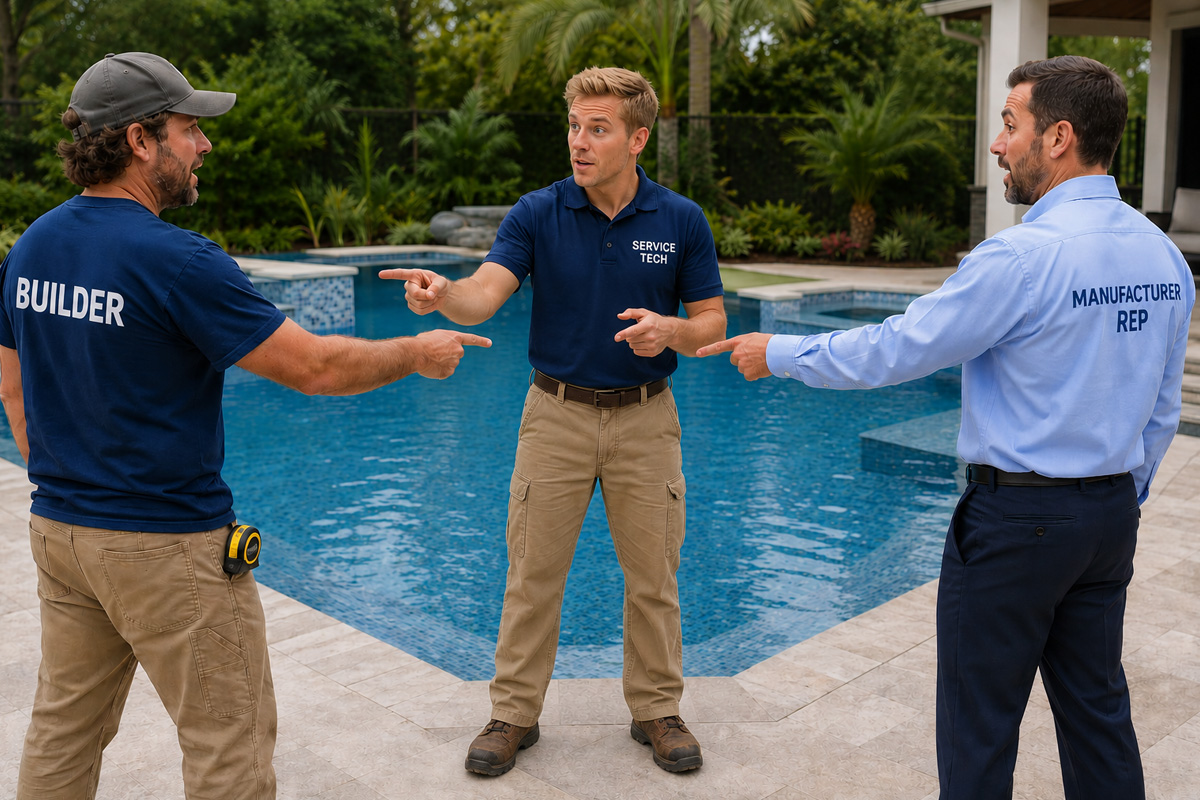
Modern pools involve designers, builders, subcontractors, service companies and manufacturers working together on the same project. Each has a generally defined role to play, but the lines can blur when problems occur. When issues surface months after construction, responsibility often becomes unclear, making disputes frustrating for both pool professionals and homeowners.
“I call it the blame game,” says Jason Broswell, president and owner of Pool Service By Jason in Northridge, California. “Everyone points a finger rather than taking responsibility for it.”
Broswell says one of the biggest frustrations occurs when builders redirect homeowners to subcontractors they never hired directly.
“The homeowner hires a contractor to build them a pool,” he says. “The way I look at it, the person who cashed the check is ultimately responsible.”
Service companies often become the default recipient of complaints, even when the issue predates them. “Anything that has gone wrong in the last year, it’s obviously got to be the pool service person,” Broswell says. “Because when the contractor left the job, it was perfect.”
Where things break down
Many pool problems don’t show up until six months or a year after construction, when accountability becomes harder to establish.
Builders are often reluctant to take responsibility, Broswell says, whether because of time constraints, liability concerns or fear their insurance premiums could increase.
Even just identifying the cause of an issue can be complicated, says Josh Ogden, co-owner of Ogden Pools in Germantown, Tennessee.
“A lot of times, systems overlap,” Ogden says. Poor circulation, for example, could stem from plumbing design issues tied to construction, a failing manufacturer component or clogged filters caused by maintenance problems.
Surface failures can be equally complicated. Improper application of plaster, pebble finish or tile may involve the installer, manufacturer or service provider, and these are among the most expensive items to fix.
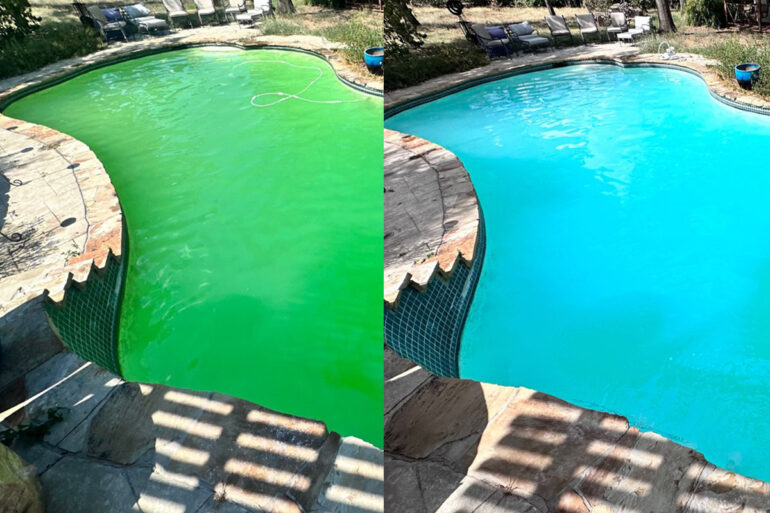
Water chemistry disputes are another common issue. Builders often handle the initial fill and start-up chemistry before turning the pool over to the homeowner or service company, but problems may not appear until weeks or months later. Because improper chemistry can void equipment warranties and damage surfaces, determining exactly when — and under whose care — the issue began can quickly become complex when multiple parties are involved. Detailed maintenance and water chemistry records go a long way toward proving the problem isn’t service-related.
When manufacturers get involved
Both Ogden and Broswell say major manufacturers are generally responsive when equipment failures aren’t the result of improper installation.
“We have an outstanding relationship with Jandy and Fluidra, and they have always supported us,” Ogden says. “We don’t make a tremendous amount of warranty claims, and when we need to, they honor it.”
Both pros say manufacturers are often more straightforward to work with than the multiple contractors involved on a project because warranty procedures and documentation requirements are typically more clearly defined. Manufacturers tend to help even outside standard warranty periods when recurring product issues are known, they add.
Broswell says keeping organized records — including serial numbers, installation dates and chemistry logs — can significantly speed up the warranty process.
Sometimes it’s nobody’s fault
Not every dispute stems from poor workmanship or equipment failure. In some cases, weather, landscaping or other outside conditions create problems no contractor could reasonably prevent.
Ogden recalls one homeowner dispute that ultimately traced back to a natural occurrence. A cottonwood tree had dropped material into the pool, and the customer believed the surface was deteriorating.
“We’re telling them this is organic material getting in the water, and it’s nobody’s fault,” Ogden says.
Soil movement, weather exposure, landscaping runoff and nearby vegetation can all contribute to issues that may resemble workmanship or maintenance failures.
Documentation is the best defense
Both Broswell and Ogden say thorough documentation is one of the most effective ways service companies can protect themselves when disputes arise. Photos, written notes and water chemistry logs can help establish timelines, identify preexisting conditions and clarify responsibility if problems develop later.
Broswell recommends documenting defects, conditions and changes over time — even before service officially begins.
“Document everything; take pictures even before day 1,” he advises. “Everyone’s got a cellphone in their pocket with a camera.”
Both stress that service pros should flag issues immediately rather than wait for them to worsen or assume they’ll resolve themselves.
“When you notice it, say something,” Broswell says. “Delays increase the chances you’ll be blamed for it later.”
Contracts also play a key role. They should clearly define what is included in the project or service — and what is not — on the front end.
Broswell says service contracts should continually evolve as companies encounter new situations and liability concerns. For example, his company clearly states technicians will never add water to pools to avoid potential flooding liability.
“Up-front transparency and honesty go a long way to help mitigate people getting hostile and upset,” Ogden says. “With records and documentation, you don’t have to be accusatorial when you’re factual.”
Solving the problem
In an ideal world, builders, subcontractors, service companies and start-up technicians would meet together on-site to resolve disputes, but that rarely happens.
Broswell says one of the industry’s biggest challenges is the reluctance for all involved parties to collaborate when problems arise.
“They don’t want to get together,” he says. “They want to point fingers behind everybody’s back. That’s a big disconnect — not getting together face-to-face and discussing how to fix it and how long it’s going to take.”
When communication breaks down, problems can drag on for weeks or even months, sometimes cutting into an entire swim season. Those situations also carry reputational risks, especially in an era where frustrated customers can quickly post complaints online before responsibility is fully understood.
Still, both Ogden and Broswell agree that taking ownership — even when the issue may not technically fall under your scope — strengthens customer relationships and protects your reputation.
“That can cost you money,” Ogden says, “but sometimes it’s the right thing to do.”
Ultimately, both pros say the companies that communicate clearly, document consistently and prioritize the customer relationship are the ones best positioned to avoid conflict.
“We’re all collectively working toward the same goal,” Ogden says. “And our end user, the homeowner, can have a better experience, and we can all do better.”
service contract essentials
Operational
- Scope of service
- Chemical parameters
- Equipment limitations
- Emergency repair authorization
Liability
- Warranty disclaimers
- Water-level responsibility
- Excluded services
Communication
- Customer responsibilities
- Document policies
- Communication expectations