From Service Route to Build Site
How service pros can start installing modern water features
For service professionals who have spent years maintaining pools, the next revenue opportunity may already be in the backyard — literally. Modern water features, once the exclusive territory of pool builders, are increasingly accessible to service pros looking to branch into installation work. Prefabricated artificial rock kits have lowered the barrier to entry and given service professionals a clear, manageable path to their first build.
Homeowners today want modern, linear water features that complement the clean lines of contemporary pool designs — and they’re often asking the person who already has their trust: their pool service technician. The challenge of sourcing attractive linear-shaped natural rock from a quarry is real, but prefabricated cast concrete kits solve that problem while also making installation simpler than traditional construction methods.
For a service pro ready to expand their business, artificial rock kits represent one of the most practical entry points into the build side of the industry. From simple rectangular bench-style units to more elaborate cavelike waterfalls, these component systems are designed to be assembled rather than fabricated from scratch — making them ideal for professionals who understand pools but are newer to construction.
Start with a kit
One of the biggest advantages of these kits is the ability to sell the job before breaking ground. Service pros can show clients a brochure of the finished product during the sales conversation — a significant confidence-builder for both parties. The essentials come with the kit, so installation is a matter of assembling and fitting the components together rather than improvising on-site.
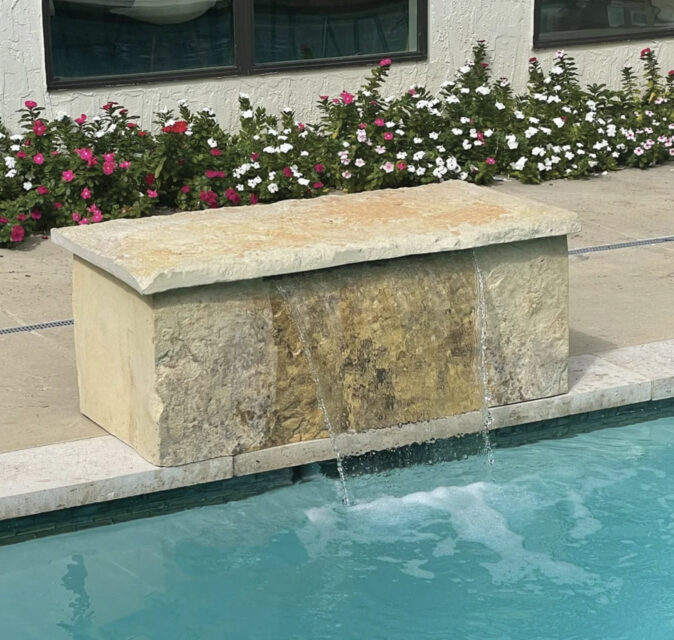
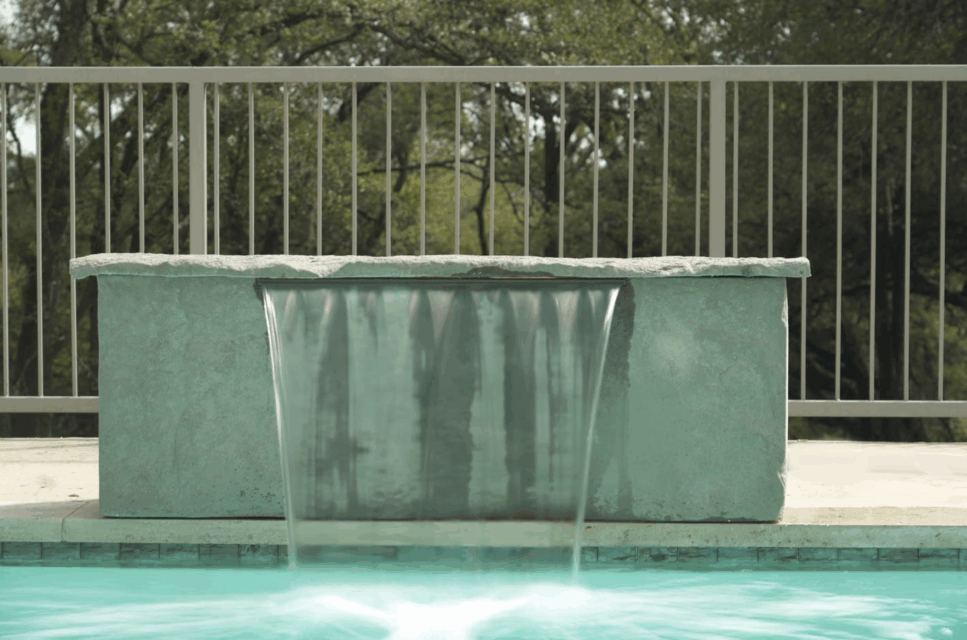
Prefabricated water features are engineered for proper water flow and weight distribution, and they are reinforced with steel for structural integrity, eliminating the guesswork. This makes them especially appealing for service pros who are confident in their pool knowledge but want a proven system to guide their first builds. The material advantages are also notable: cast concrete units are cast from molds of actual rock, giving them authentic shape, texture and character. Unlike real sandstone or limestone boulders, which can shed sand and debris into pool water, cast concrete holds up cleanly. Side-by-side, it can be genuinely difficult to distinguish from the real thing.
Know your canvas
Before any digging or ordering begins, a service pro moving into installation work should consider placement. Water features anchor the visual design of a pool area, which means their location relative to the home matters enormously. Walk the backyard and identify which doors and windows face the pool — a well-positioned waterfall framed by a sliding glass door creates a first impression that generates referrals. Getting the placement right before committing to a design is one of the easiest ways for a first-time installer to ensure a satisfied client.
On the design side, service pros should know that the current trend in modern backyard decor leans toward contrasting light and dark elements. Light limestone-colored water features are particularly popular because they stand out against darker decking and pool interiors while blending into the surrounding landscape. Today’s cast concrete kits integrate this palette convincingly with chipped surfaces that mimic the real thing and built-in weirs that create a clean, modern waterfall effect. Many units double as seating, which adds everyday functionality and value.
Add lighting
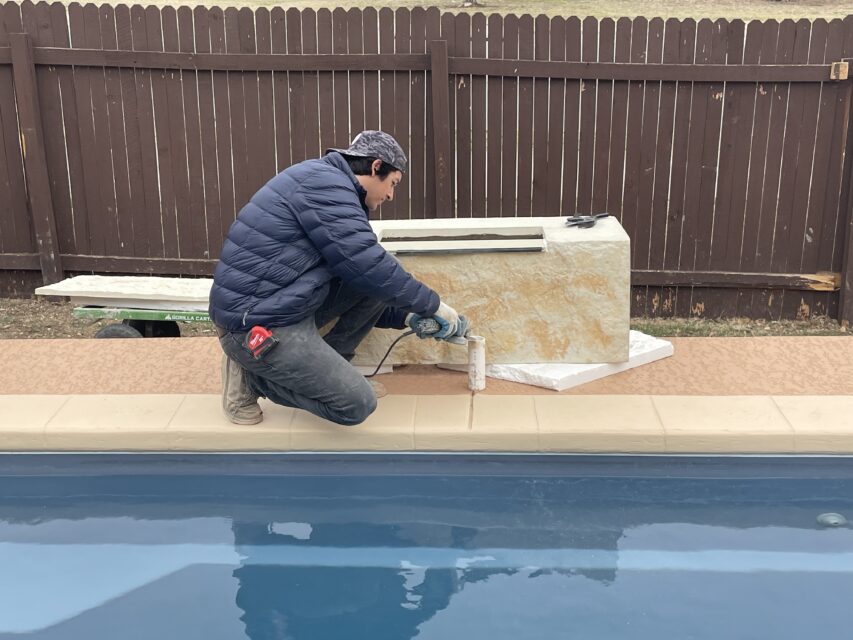
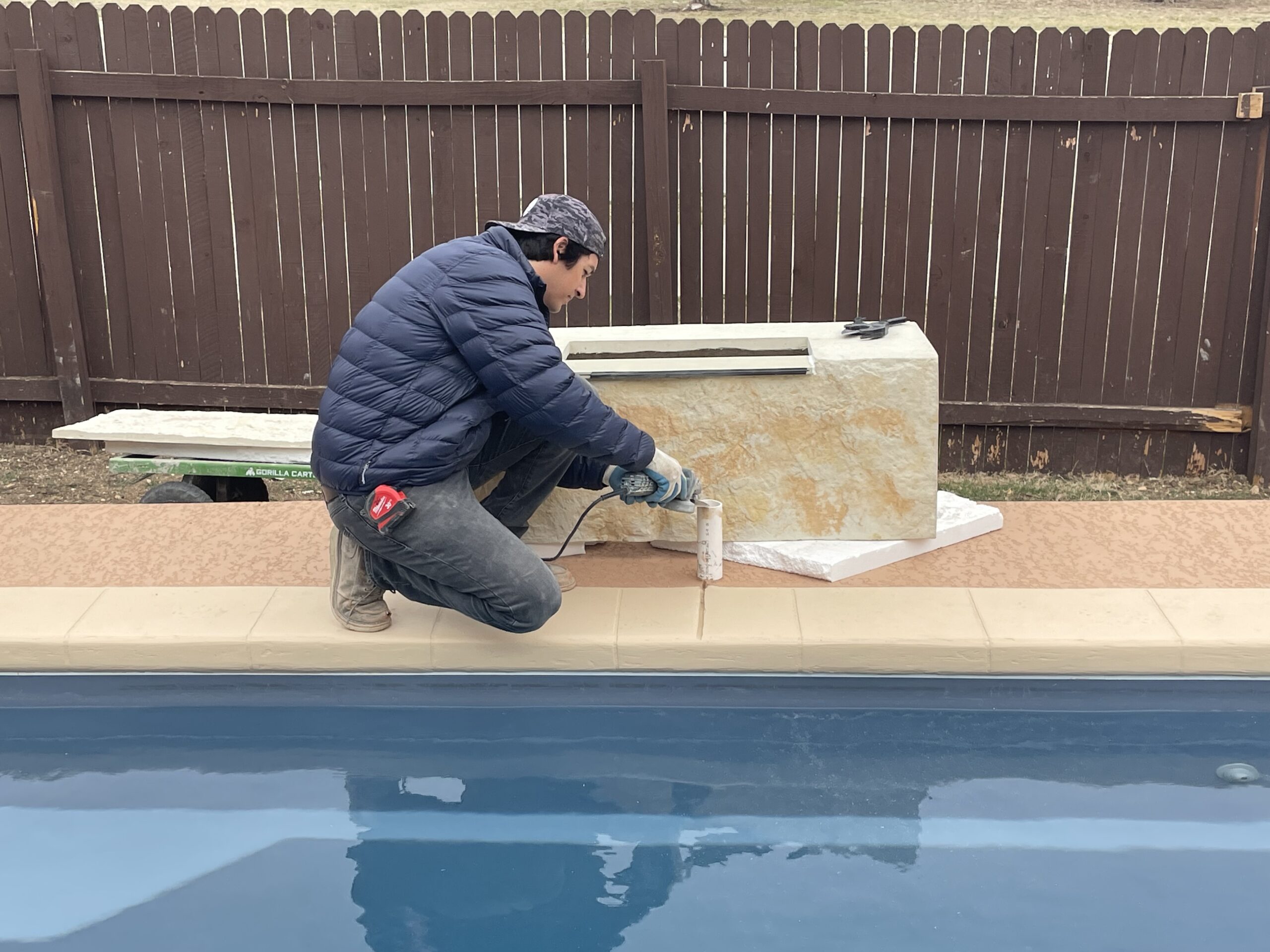
Lighting is where service pros can meaningfully increase the value of a water feature installation — and their invoice. Most prefabricated kits are designed with hollow cavities running under bench caps and top stones, making it straightforward to add LED lighting without custom fabrication. Fiber optic light bars can be fitted by cutting slots into the feature and tucking the bars in place. The ability to change light color gives the finished feature a dramatic, dynamic quality that photographs well and impresses guests — the kind of result that drives word-of-mouth referral. Illuminated pavers placed beneath water feature columns can also extend the lighting effect across the surrounding area.
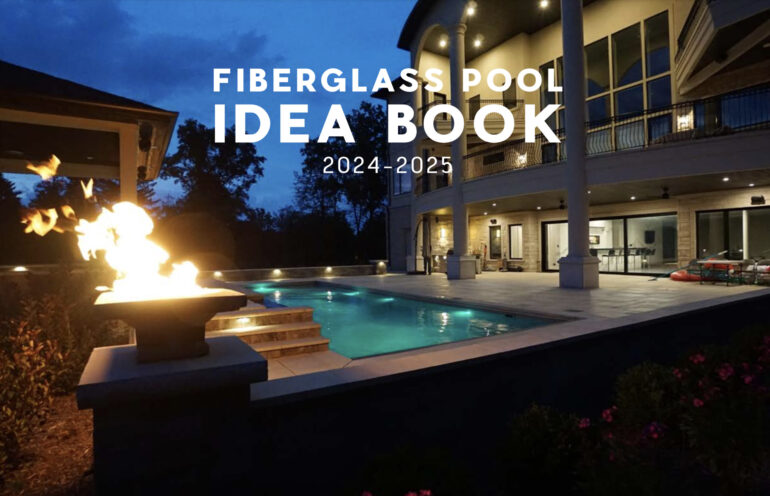
A complete lighting plan helps homeowners envision using their outdoor space across every time of day and season. By day, water features offer ambient sound and a natural play area. By night, the combination of illuminated water, fire features and strategic spotlighting transforms the same space. Service pros who can speak to this dual-use potential — and who have a lighting package ready to present alongside the water feature — will find it easier to close larger jobs from the start. Colored bubblers in the shallow end of the pool, firepits and spotlights in surrounding plantings all contribute to a cohesive after-dark environment that clients are unlikely to forget.
The installation
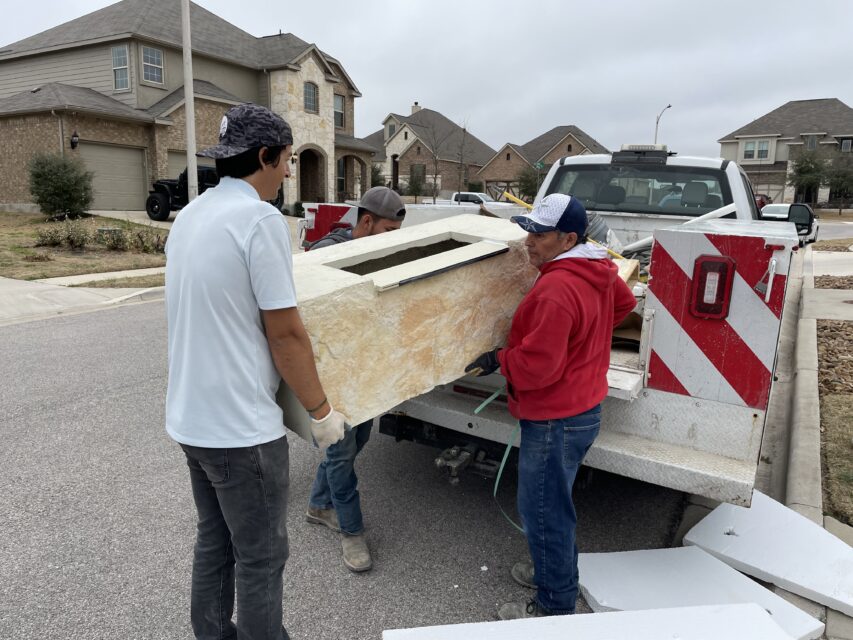
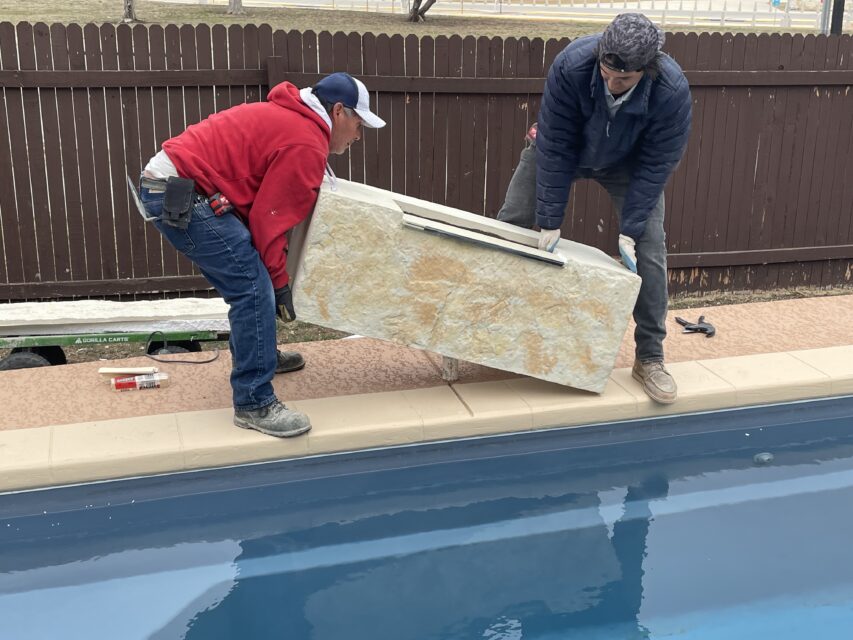
Most prefabricated water features use an on-deck mount application — a manageable starting point for service pros new to installation. Concrete footings can be poured into the surrounding yard, or the unit can be set onto an existing deck surface using type “s” mortar. This mortar bonds securely, lasts long-term and is easy to mix, making it a practical first choice for installers working without a large crew.
For new pool construction, the waterfall acts as an additional “return” line from the pool. Service pros can match the pipe size already used for the pool — typically 1 ½- to 2-inch rigid schedule 40 PVC. If the manufacturer’s supplied plumbing is smaller, a reducer bushing bridges the gap. Most manufacturers recommend a flexible spa hose to connect to the waterfall fitting and a ball valve or three-way valve to control flow rate. This valve gives the homeowner control over water volume and sound — useful for those who want the waterfall to mask traffic noise or prefer a quieter trickle.
Adding a water feature to an existing pool is one of the most common first jobs a service pro will encounter. The key step is installing a “stub up” — a plumbing connection that ties the waterfall into the existing return line from the pool filter. Most manufacturers provide step-by-step installation videos specifically for this scenario. Watching those videos alongside the installation manual before breaking ground will save time on the job and help avoid common mistakes.
Flow rate is a critical variable that service pros need to get right from the start. Most waterfall units offer a range of gallons per minute, giving homeowners control over sound and intensity. The bigger concern is making sure the waterfall does not divert too much water from the pool’s circulation system — an issue that can compromise water quality if overlooked. Depending on the size of the waterfall, a pump upgrade may be required. Before securing the waterfall to the deck, always pressure-test the plumbing and check for leaks.
Once the waterfall is positioned and the stub up is in place, connect using flexible PVC pipe for ease of future removal or adjustment. One key detail to verify: the top of the spillway must be level for proper water flow. This is easy to overlook but makes a visible difference in the finished result. It’s also worth checking flow volume carefully; too much water can splash out behind the feature in a way that isn’t immediately visible, wasting pool water and potentially damaging surrounding landscaping and plantings.
Your first build
For service professionals ready to take their first steps into building, modern artificial rock water features represent one of the most approachable entry points. The kits are engineered to install cleanly, the materials look genuinely convincing and the finished product delivers the kind of dramatic transformation that earns referrals. Starting with a straightforward two-piece or three-piece unit — bench style, on an existing deck, tied into existing plumbing — builds both the skills and the confidence to take on larger, more complex projects. Combined with thoughtful placement, a lighting package and an understanding of the pool’s hydraulics, even a first-time installer can deliver a result that looks like the work of a seasoned builder. That’s exactly what makes water features such a compelling next chapter for service pros looking to grow.