When One Day Isn’t Enough
Managing multiday commercial plaster jobs
Known for its affordability and classic, smooth finish, plaster remains a popular choice for commercial pools, from hotels and resorts to apartment complexes, university aquatic centers and municipalities.
For builders and contractors, plastering these mega projects is generally a one-day event, which helps companies control costs and manage materials, but several factors can turn it into a multiday job.
Weather is the most unpredictable reason a job may spill into a second day because conditions can shift quickly, and the impact is immediate. “Rain and temperatures are important to us, and having too much sun or too much wind can be a problem,” says Lee Vaughan, president of Virginia-based National Pools of Roanoke.
Other factors are more within a contractor’s control. Job size, design complexity, advance planning and environmental challenges all influence the timeline.
For Vaughan, the rule of thumb is clear: “We try to do anything 7,000 or 8,000 square feet or below in a single day, but anything over 8,000-plus becomes questionable.” Features like tanning ledges, benches and vanishing edges add to the trowel time and may require two days.
Planning ahead
Sometimes the size of the pool exceeds the amount of plaster crews can trowel before it starts setting. When scheduling the workflow for these larger projects, there’s usually a definitive stopping and starting point. Pools that are 8,000 square feet or more will often have an expansion joint or something already dividing the pool into two sections, Vaughan says, which gives a natural stop on day one and a place to resume on day two.
Material planning is just as critical. National Pools has all the materials for the job delivered on the first day, so there’s no delay in starting up again. At Hydroscapes Pools & Patio in Oklahoma City, the supplies needed for the day are loaded in pallets onto the flatbed truck with the mixer, owner Jarrett Hughes says. For a larger job, they’ll bring another truck and trailer loaded with the extra material.
If an unexpected delay forces the job to stop midway, crews create a clean, intentional break. “We generally do a tile line or some sort of transition strip to stop the plaster from day one, so we don’t have a visible cold joint between the two plaster applications,” Vaughan says. Hughes follows the same practice: “If something detrimental happens, we’ll do a tile break in that situation, too.”
Color matching is seldom an issue for larger commercial work, as two-day plaster jobs are typically white or white base, Hughes says. “It’s all about mixing it properly, but the key is keeping the same batch guy on the truck,” he adds.
Site accessibility is another factor to consider because the plaster pump must be parked somewhere. Hose length can be an issue with very large or uniquely shaped pools, like lazy rivers. Standard trucks carry about 300 feet of hose, so problems are infrequent, but when they occur, cleanup and remobilization consume valuable time.
Environmental and timing challenges
Beyond rain, sun and wind, seasonal swings can complicate work. Vaughan notes that fall temperatures in Virginia can reach 70 degrees during the day and drop to 30 degrees at night. “Materials expand and contract, and we try to prevent this or limit it the best we can,” he says. To mitigate the variation, they aim to schedule two consecutive days with similar temperature, moisture and humidity.
Regardless of the timeline, one critical step remains: coordinating the quick fill and handoff to the start-up team and owner, which requires consistent communication and alignment on timing and weather considerations, Vaughan says.
No matter how well crews plan, commercial plaster work still requires flexibility. When contractors prepare for the unexpected — whether it’s shifting weather, material timing or jobsite logistics — they’re better equipped to deliver a consistent finish. With thoughtful coordination and a willingness to adjust, even multiday projects can achieve the same quality as a seamless one-day job.
case study
A two-day plaster job on the mountain

Lee Vaughan, president of National Pools of Roanoke, recounts a challenging multiday pool plaster job at Snowshoe Mountain Resort in West Virginia. The team had a tight three-to-four-week window between mountain biking season and the start of ski season. “After we finished the demolition for the plaster preparation, we looked at the 10-day forecast, and there wasn’t a day that wasn’t freezing,” he says.
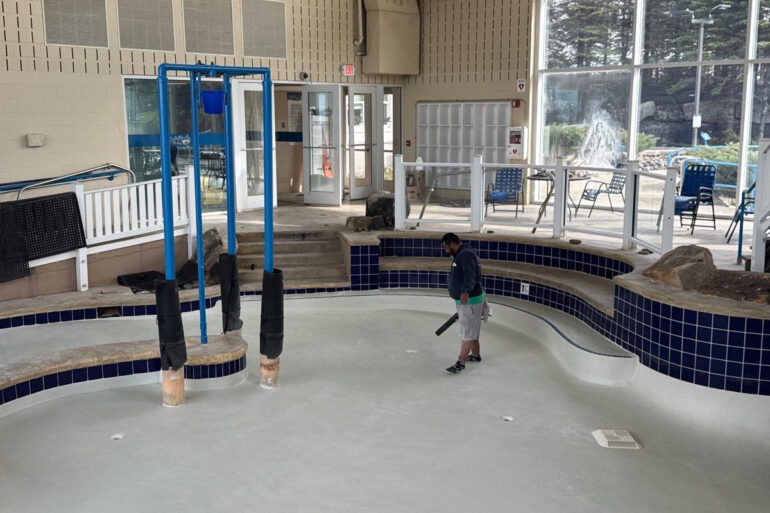
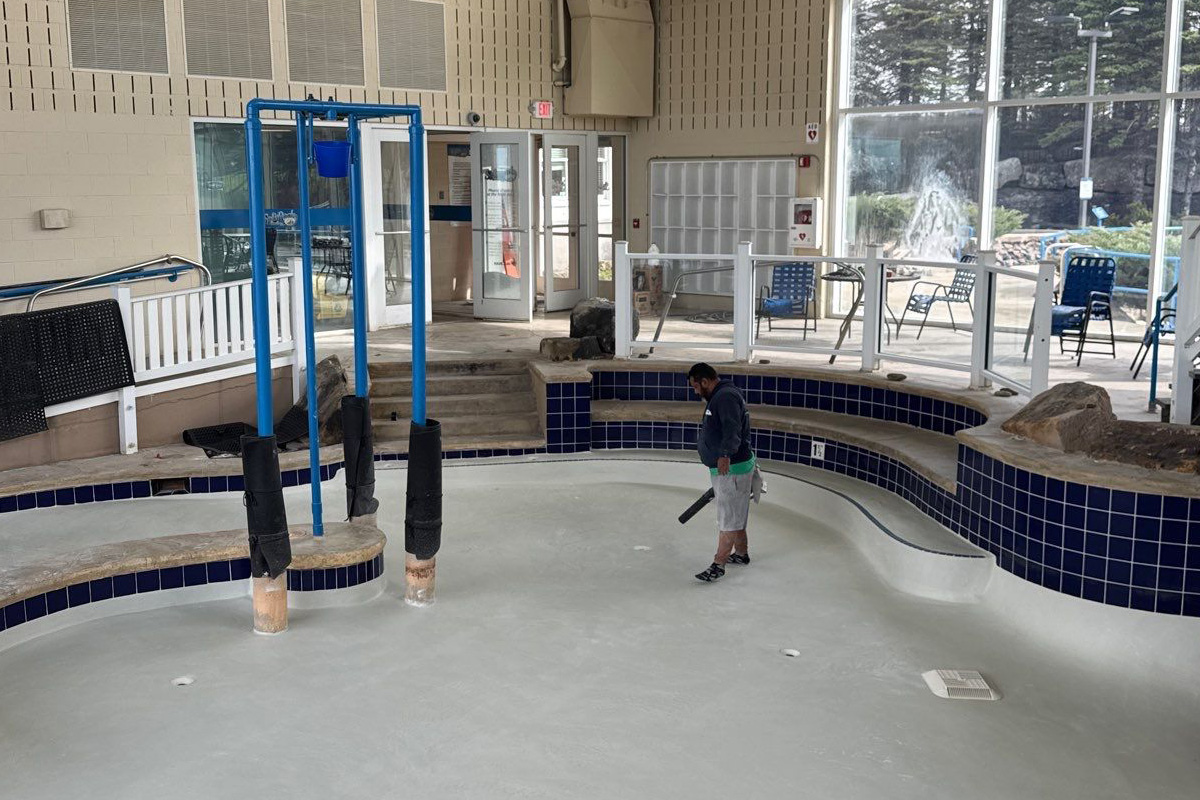
The pool’s design added another layer of difficulty: half indoors and climate controlled, half outdoors and exposed. “The outdoor portion of the pool was deeper, which allowed us to start filling the outdoor section before the indoor section was completed,” Vaughan explains. “An expansion joint where the pool was constructed through the exterior wall that had a caulked joint lined with tile on either side allowed us to have a definitive start/stop point between the two days.”