
When the Grid Goes Dark
How to manage power outages
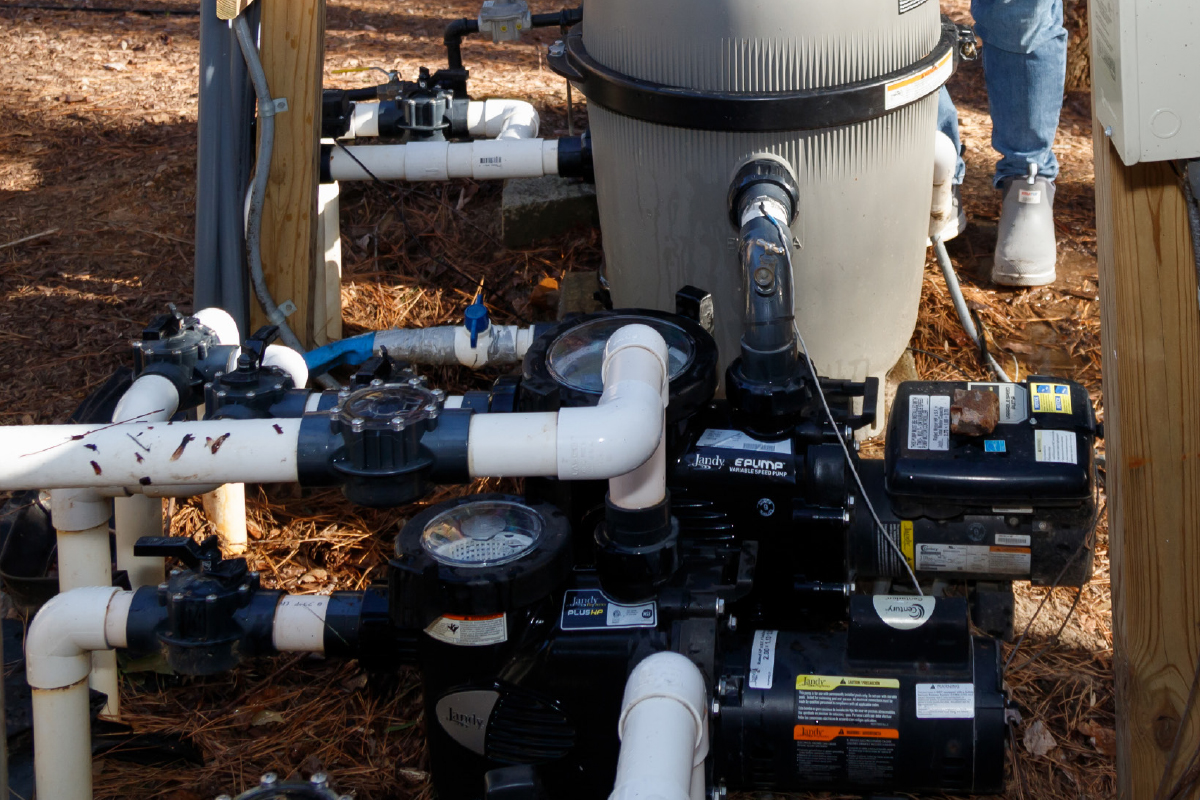
Whether driven by hurricanes, heat waves, winter storms or an aging electrical grid, outages are a recurring stress test for pool pros. While power loss itself is unavoidable, the damage that often follows is not. What separates a manageable disruption from cracked equipment, fried electronics, green water and customer fallout is how outages are handled before they occur, while systems are offline and, most critically, when power returns.
Before the storm hits
It’s tempting to blame outages for the failures that follow them, but in many cases, it’s not the outage itself that causes damage; it’s what happens next. Controlled restarts performed by trained professionals can prevent most issues; uninformed restarts often create them.
That distinction starts with preparation. Electrical instability accounts for much of the equipment damage seen after storms and grid events. Surges and rapid cycling can quietly take out pumps, heaters, automation boards and variable-speed drives, so experienced pros increasingly recommend proactive breaker shutdowns before storms or grid instability.
“If you know bad weather is coming, shutting off the breaker can save thousands in equipment damage,” says Ron Hicks, owner of Pool Scouts Huntsville in Alabama.
Michael Ellison, owner of Cool Haven Pool Repair in Texas, points to electrical upgrades as conversations pros should be having long before outage season. GFCI-protected breakers and outlets — now required in many jurisdictions for new equipment — don’t just protect people; they help trip systems during over- or under-voltage events. “During outages and power fluctuations, they can shut equipment down before electronics take a hit,” Ellison says.
Seasonal risks, different priorities
Seasonal differences shape failure profiles. Summer outages are chemistry races. Winter outages are mechanical minefields.
In warm weather, the goal is buying time. Elevated sanitizer levels going into an outage help protect water quality when circulation stops, especially in high heat, when chlorine burn-off accelerates quickly. Liquid chlorine offers flexibility because it’s already dissolved and doesn’t rely on feeders or flow to work.
In colder months, chemistry becomes secondary to mechanics, and freeze protection must be verified, not assumed. Automation settings, sensors and temperature thresholds should be checked beforehand.
“If it’s below freezing and you lose power, you’ve got to drain the equipment,” Ellison says. “Frozen water will crack housings, valves and plumbing. That’s just physics.”
Set the rules early
Just as important as what pros do is what homeowners don’t do. Clear, proactive communication about boundaries during outages is one of the most effective risk-reduction tools. Many operators send prestorm or prefreeze messages outlining simple rules: don’t restart equipment, don’t adjust breakers, don’t add chemicals and don’t assume automation will handle it. This guidance protects not only equipment but also warranties, service relationships and trust.
“We’re very clear with customers before storms or outages — don’t touch the equipment and don’t restart anything on your own,” says James Broderick of JB’s Pool Care in Franklinton, North Carolina. “We explain that systems need to be inspected before they’re powered back up. That communication alone prevents a lot of damage and unnecessary service calls.”
Restraint is key
Once the power is out, restraint becomes your most valuable skill. Most outages don’t require immediate truck rolls, and rushing to “fix” a powerless system often increases liability without reducing risk. The real danger often comes after the outage is over.
“Homeowners hear the power come back on and assume everything’s fine,” Hicks says. “They don’t check it. That’s when dry pumps and equipment damage happen.”
When power does return, experience takes over. Restarting is not a switch. It’s a process, and this is where long-tenured service pros have an edge.
“Most expensive service calls happen after power returns, not while it’s out,” Broderick says.
Before touching chemistry or controls, seasoned techs observe. They look. They listen. They smell. Dry starts, grinding motors, repeatedly tripping breakers and arc marks all signal problems that need to be addressed before equipment is reenergized.
“After enough years, you hear it,” Hicks says. “A motor sounds different. The system sounds strained. Pools tell you when something’s wrong.”
Ellison adds that smell is often an early warning. “You can usually smell electrical damage,” he says. “Once you’ve smelled a burned terminal or control board, you never forget it.”
These sensory cues are the quiet advantages of experience, and they’re worth explaining to customers. When homeowners understand pros aren’t just flipping switches, they’re far more likely to wait for proper restarts instead of taking matters into their own hands.
Flow first, chemicals later
Only after circulation is fully restored should chemistry be addressed. Shock treatments may be appropriate after extended outages, particularly in warm climates, but adding chemicals without flow introduces its own risks. Without circulation, concentrated chlorine can settle in one area, leading to surface bleaching, etching, liner damage or degraded fittings. Once power returns, that undispersed chemical load can hit filters and equipment all at once, shortening media life and creating imbalances that take longer to correct than the original problem.
“We tell customers not to add anything to the pool until we’ve confirmed flow,” Broderick says. “Without circulation, you’re not treating the water — you’re creating hot spots that cause damage.”
Covers are another simple way customers can protect their pools from storm damage. “In a hurricane, always cover the pool,” Hicks says. “Flying debris always finds water.”
Route strategy matters
After widespread outages, route strategy matters as much as technical skill. Experienced operators triage service routes, prioritizing automation-heavy systems, high-equipment pools, commercial and HOA accounts, older customers or those with children and properties with safety exposure.
“You can’t rush recovery,” Broderick says. “The faster you go, the more problems you create.”
Power outages don’t reward panic. They reward preparation, patience and pros who trust process and instinct over impulse.
Postoutage Restart Checklist
- Pause before power-up: Confirm grid stability. Avoid rapid cycling or immediate restarts that can damage electronics.
- Inspect the equipment pad: Check for leaks, cracked housings, debris, flooding or displaced lids. Look for burn marks or carbon tracking on control boards.
- Use your senses: Listen for humming or grinding motors. Smell for burned insulation or electronics. Feel for abnormal heat. If something seems off, stop.
- Confirm prime and flow: Ensure pump baskets are full, valves are open and filters are ready to handle circulation. No flow means no restart.
- Restart in sequence: Bring systems online methodically: pump → filter → heater → automation and accessories. Avoid energizing everything at once.
- Verify automation and safety settings: Check clocks, schedules, freeze protection, sensors and GFCI breakers. Assume nothing carried over correctly.
- Monitor initial operation: Watch pressure, air in lines, cycling behavior and breaker stability. Stay long enough to catch early warning signs.
- Address chemistry only after flow: Test and rebalance water once circulation is stable. Shock only if appropriate. Never add chemicals without confirmed flow.
- Communicate with the customer: Explain what was inspected, what was restarted and what not to touch. Clear guidance prevents callbacks and DIY damage.
- Document the visit: Log inspections, resets and any deferred issues. This protects you if problems surface later.