School is in Session
Training customers to care for their pool
Whether your new pool customers are first-timers or previous owners, they’ve likely bought into at least one of the persistent myths of pool care: pools only need minimal maintenance, more chemicals mean a cleaner pool or clear water means clean water. And, of course, many believe they only need maintenance when there’s a problem.
As pool pros know, homeowners should understand necessary maintenance from the get-go. For builders, education starts at the handoff when a new, perfectly balanced pool is turned over to its owners. After completing the new pool start-up and orientation, “I hand the reins over to them or their pool guy; it’s in my contract,” says Adam Aguirre, owner of California Poolman in Los Angeles.
But that doesn’t mean the learning stops there. “Pool school is always in session,” Aguirre adds.
Lessons that stick
Homeowners often underestimate what proper pool care entails. Educating them early prevents costly mistakes, protects equipment and keeps pools in top condition. Some pros, like Maddy Vandiver, maintenance supervisor at The Pool Butler in Marietta, Georgia, begin with analogies. A favorite one compares the pool to a human body.
“The pump is the heart, the filter is the liver, the heater or heat pump is your hypothalamus controlling temperature and all that blood in your veins is the piping,” Vandiver says. “The automation panel turning everything on and off is your brain.”
Pool school can take different forms — formal in-store sessions, home visits or one-on-one “homeschooling.” At Clearwater Pool Supply and Maintenance in St. George, Utah, store manager Jared McEwan (known on YouTube and social media as The Pool Professor) offers regular in-store trainings.
“This is the point where customers will often decide to hire a service company instead of managing it themselves,” McEwan says. But even for DIY-minded owners, the information helps set expectations and build confidence.
Training and tech tools
For many customers, seeing their pool in action makes all the difference. Vandiver and other pros encourage clients to record video tutorials on their phones during walkthroughs. These personalized clips beat generic content by showing exactly how to maintain their equipment.
Vandiver also recommends apps that simplify chemical calculations for those who prefer not to do the math. She provides a cheat sheet listing chemical ranges, adjustment instructions and recommended levels. McEwan leaves behind a printed guide and a magnet with basic care reminders to keep maintenance top of mind.
For Aguirre, pool school doesn’t end with the first visit. He offers up to three complimentary follow-up calls to address minor questions or concerns. After that, as outlined in his contract, additional visits incur a standard service fee.
Beyond clear water
In addition to “here’s how you do it,” pool owners must understand clear water isn’t necessarily clean water. It can hide issues like improper pH, alkalinity or calcium hardness, which is harmful to users and the pool.
Though complications can lurk in clear water, cloudy water also reveals issues. “Cloudy, murky water is the harbinger of a bigger problem to come; it’s a telltale sign that your chemistry is off or there’s poor circulation,” Aguirre says.
Building good habits
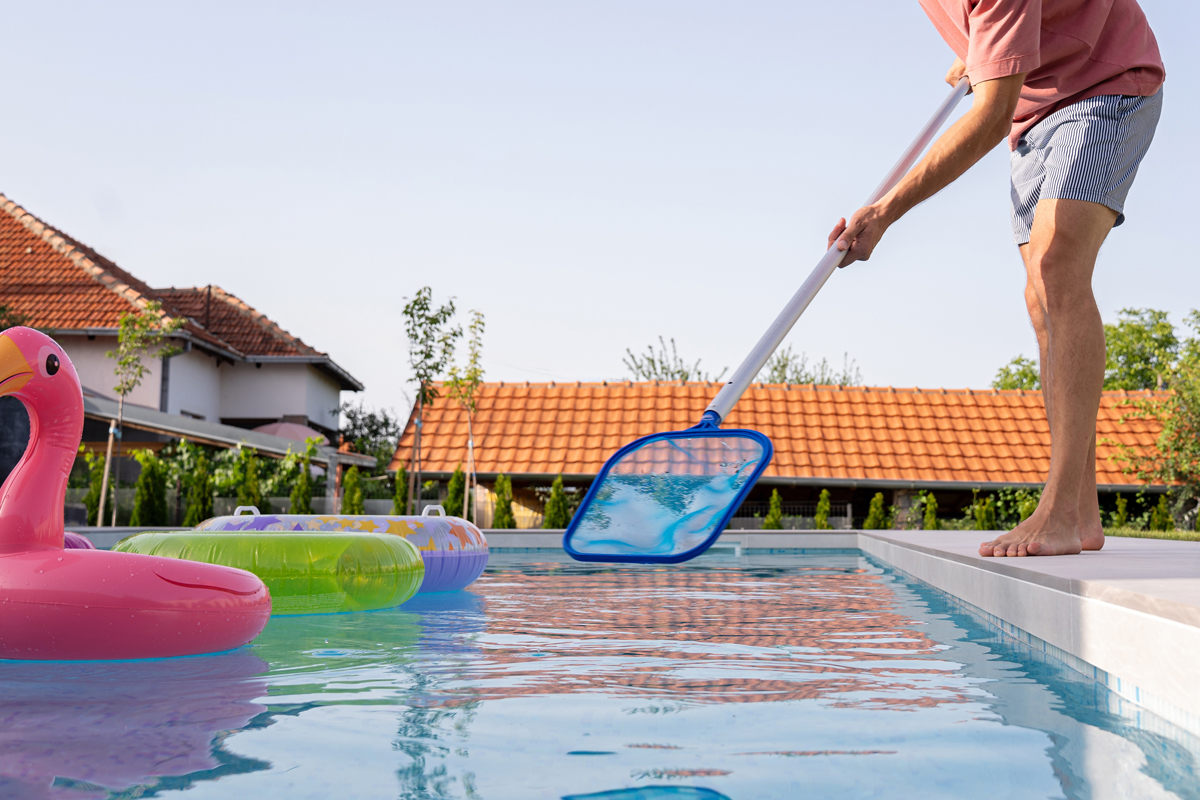
Training isn’t just about knowledge — it’s also about routine. Aguirre recommends helping clients set a consistent cleaning schedule. “If you want to have fun with it, just say ‘OK, Sunday is my clean-the-pool day.’ Then crack open a beer or a Diet Coke, listen to music and spend 30 minutes cleaning the pool,” Aguirre suggests.
Service pros like Vandiver follow up regularly in the first year to help customers stick with their maintenance routines.
“Once I started doing the follow-ups, they were more likely to keep things going,” she says.
Seasonal routines vary by region, but the message is the same: Preparation prevents problems. In southern Utah, McEwan uses freeze protection and nighttime pump cycles instead of full winterization, making sure the system is ready when temperatures drop.
Parting advice
Consistency is the most important lesson, McEwan says, especially with maintaining the pool’s alkalinity, pH and chlorine levels. “Bring a pool water sample into the store [at least] quarterly, and we’ll do a free test,” he tells his customers.
For pros like Aguirre, Vandiver and McEwan, pool school is an ongoing partnership that helps homeowners protect their pool, keeping it healthy, safe and sparkling all year long.