The Chemistry Blame Game
Pool pros share real stories of misunderstood water problems and the challenges of navigating difficult client situations
Anyone who has worked in pool service long enough has probably experienced it: A customer notices damage, staining or another issue and immediately assumes the water chemistry is to blame — and that the service company is responsible. In reality, these situations are often far more complicated, involving everything from improper homeowner maintenance to equipment failures, environmental factors or preexisting conditions. PoolPro asked industry professionals to share some of the most memorable times they were blamed for chemistry-related problems, what the real cause turned out to be and how they handled the aftermath.

Hunter Peterson, Service manager
Patriot Pool and Spa
Dallas, Texas
We had a customer come in three consecutive weeks with recurring algae issues, despite multiple treatment attempts. Each visit, our team escalated the approach — moving from standard breakpoint chlorination to higher oxidizer demand — but the problem persisted. From the customer’s perspective, it came across as inconsistent service, and understandably, we were held accountable.
What made this case challenging was that our water analysis showed balanced chemistry across the standard parameters — pH, alkalinity and sanitizer levels were all within range. On paper, there was no obvious failure point.
After reviewing the situation more holistically, we shifted the focus to water age and cumulative chemical loading. The customer was unable to confirm the last time the pool had been drained, which led us to identify the underlying issue as elevated total dissolved solids and likely stabilizer buildup. While not immediately obvious in routine readings, these conditions were effectively reducing sanitizer efficiency and preventing sustained algae control.
We recommended a full drain, clean and refill to restore water quality. Although the customer initially questioned the need, they ultimately agreed after repeated treatment failures and increasing chemical costs. Once the pool was refilled and properly balanced, the system stabilized and the algae issue was resolved.
Lesson learned: When recurring issues persist despite balanced test results, it’s critical to look beyond standard chemistry readings. Water quality degradation over time can quietly undermine treatment effectiveness, and in those cases, dilution — not additional chemicals — is the correct solution.
Aden Dunne, Owner
Classic Pools & Spas
Carlsbad, California
One situation that stands out to me involved a customer whose pool kept turning cloudy and developing algae despite regular service and detailed chemical testing and treatment. We were repeatedly blamed for “bad chemistry” because the chlorine demand was extremely high and the water never seemed to stabilize for long.
After digging deeper, we discovered the homeowner had been using inexpensive phosphate remover and algaecide products from a retail store between visits without telling us. They assumed “more chemicals = cleaner pool,” but the products were reacting poorly with the existing treatment plan and creating constant swings in water balance. On top of that, they had begun changing the pump schedules each day to save on electricity costs, so circulation and filtration were both suffering badly.
By the time we figured out what was happening, the pool had severe algae buildup, stained plaster and a filter that was completely overloaded. The cleanup took multiple visits, a deep filter cleaning and a substantial amount of chemicals and labor. The customer was frustrated initially and blamed our service heavily, but once we documented the shortened run times and the additional chemicals being added independently, they realized the chemistry issues weren’t being caused by lack of service.
It was one of those situations where the water chemistry became the visible symptom, but the real problem was due to homeowner adjustments in the equipment operation, not informing us of them adding their own chemicals and too many outside variables not being noted when discussing the possible causes.


Kelly Collins, Operations manager
Code 3 Pool Service
Inverness, Florida
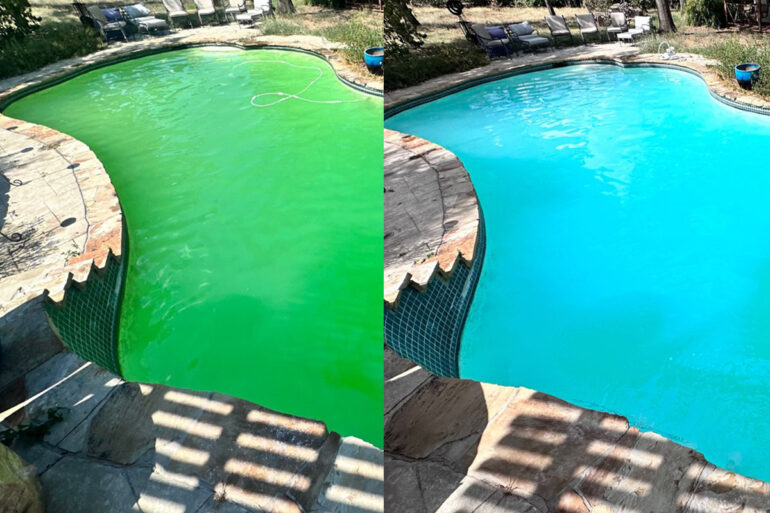
We did a green-to-clean on an above-ground pool, beginning on April 1 and ending on April 7. Everything was “perfect.” A few weeks later, the customer sent a photo of the green pool and said, “What happened? Looks like we are going backward.” It was much nicer than it could have been.
I sent a tech out right away for a shock treatment and backwash. The next day, I sent a tech for a follow-up — the chemicals were in shock level, but the pool was still green. I had the tech bring a sample of water back to the office. We tested for phosphates and got a reading of 500 ppb. We treated the pool with phospate remover, and it was a good reminder that a pool can still turn fast, even when the chemistry looks perfect.
We recently also had a stray dog jump into a work truck when the tech stepped out for a moment. CRAZY!
Amanda Gonzales, Co-owner
Blue Whale Pool & Spa
San Antonio, Texas
Excess salt after new salt cell installation
We recently opened a pool where a new salt cell had been installed. During the initial service, we added the appropriate start-up dose of salt and advised the client that we would return the following day to continue calibrating and adjusting the system.
Later that evening, the client noticed the system was reading “low salt” and decided to add salt on their own, ultimately adding approximately 400 pounds. When we arrived the next day, the client informed us of what had been done.
To correct the issue and prevent further damage, we had to drain approximately 75% of the pool to bring the salinity back within range. This level of dilution was the only effective solution.
Had we not acted quickly, the excessive salt levels could have caused significant damage, including:
- Overloading and prematurely shortening the life of the salt cell
- Accelerated corrosion of metal components such as screws, light rings and fittings
- Potential damage to equipment, including heater components and pump seals
Unexpected water source — raccoon interference
We had a longtime client who unfortunately died, and while their estate was being settled, the family continued pool service with us.
During a routine visit, our technician noticed the pool water level was low and added water as part of standard service. A few days later, the family contacted us, concerned that the pool had overflowed and flooded the patio. Review of the service photos showed the hose in the pool, so we took responsibility, apologized, coached the technician and covered the water bill.
A few visits later, the same issue occurred. The technician insisted that no water had been added during that visit, but with the property unoccupied, we again assumed responsibility and covered a second unexpectedly expensive water bill.
Shortly after, the issue happened again — this time on a Wednesday, when we had not serviced the property (our service day was Monday). At this point, it was clear something else was going on.
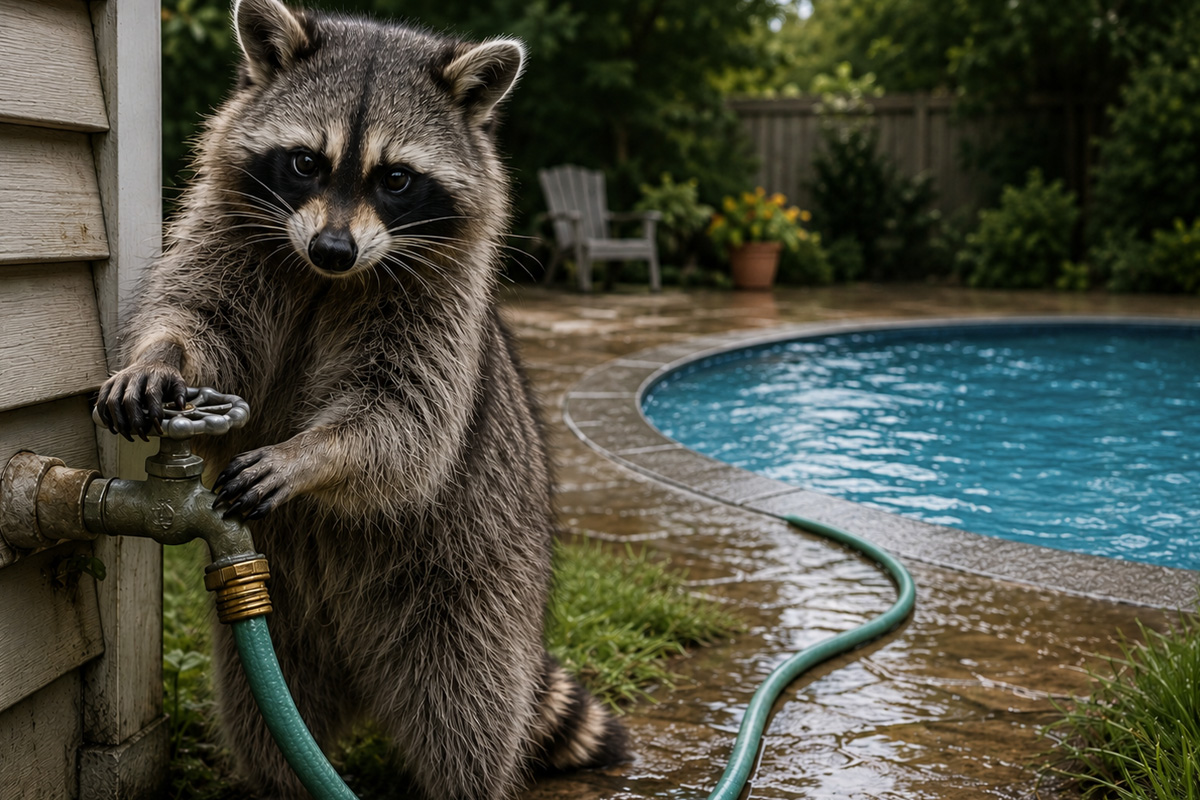
The family installed a trail camera at the water spigot and discovered the cause: A raccoon was turning the water on.
The repeated, uncontrolled addition of water created significant challenges in maintaining proper water chemistry and balancing the pool.